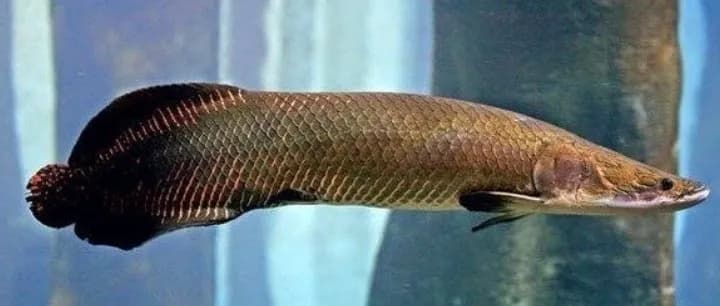
The Arapaima (Arapaima gigas) is one of the largest freshwater fish species in the world. Native to the Amazon Basin, it's known for its size, armor-like scales, and ability to breathe air.
Scientific Name
Arapaima gigas
Habitat
Native to slow-moving rivers, floodplains, and lakes in the Amazon Basin of South America.
Conservation
Listed as vulnerable due to overfishing and habitat loss in the wild. Subject to fishing regulations and conservation programs in many parts of the Amazon.
Lifespan
Can live over 20 years in captivity.
Fun Fact
Arapaimas can survive in oxygen-poor water by breathing air using a primitive lung (modified swim bladder).
Diet
Carnivorous – feeds on fish, crustaceans, small mammals, and birds. Known for gulp-feeding and ambushing prey.
Average Size
Can grow up to 15 feet (4.5 meters) in the wild; typically 6–10 feet (1.8–3 meters) in captivity.
Location / Placement info
Displayed in the Coastal Reef Exhibit, near the Ocean-View Tunnel
FAQ
What is the lifespan of an Arapaima?
Arapaimas can live up to 15–20 years in captivity, and even longer in the wild.
What do Arapaimas eat?
They are carnivorous, feeding on fish, crustaceans, insects, small mammals, and birds.
Are Arapaimas aggressive?
They are not typically aggressive but can become territorial and powerful, especially in confined spaces.
What is the ideal tank size for Arapaima?
Not suitable for home aquariums. Juveniles need 300+ gallons, adults require 10,000+ gallons or pond-scale environments.
Do they need a specific environment?
Yes, they need warm (24–30°C), well-oxygenated water, low current, and large surface area for breathing.
How big do Arapaimas grow?
Arapaimas can grow over 8 feet (2.5 meters) and weigh up to 485 lbs (220 kg).

 )
)