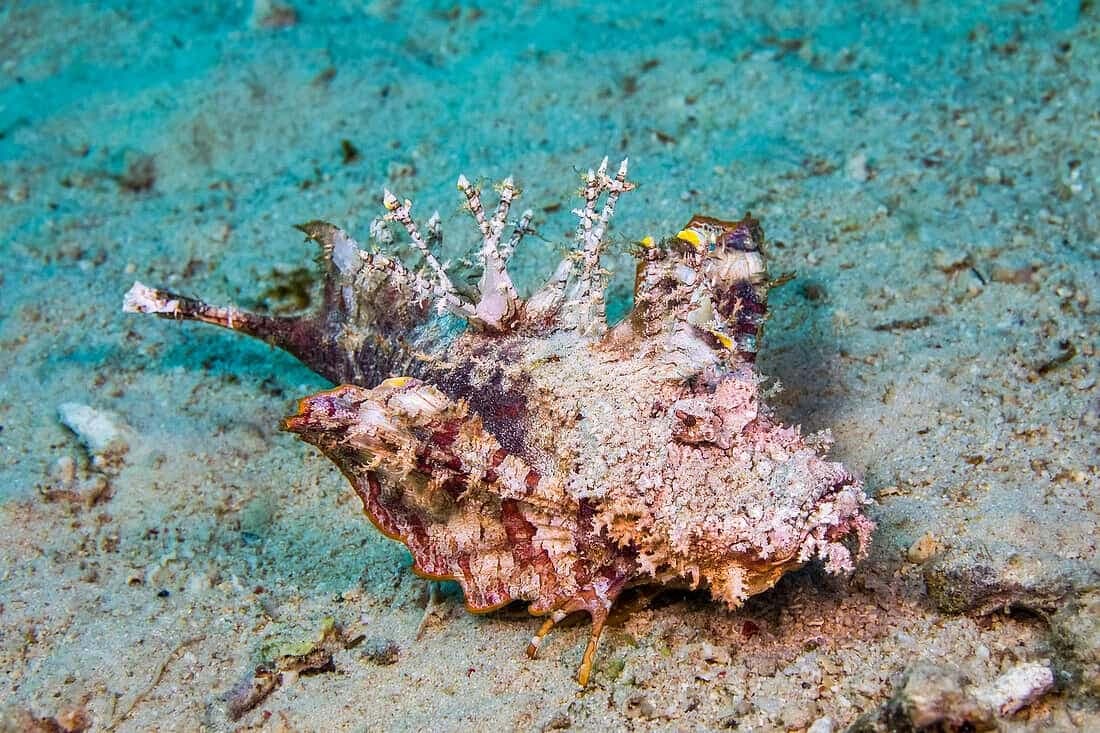
The Demon Stingerfish (Inimicus caledonicus) is a venomous bottom-dwelling fish known for its excellent camouflage. It buries itself in the sand and ambushes small prey using its powerful mouth
Scientific Name
Inimicus caledonicus
Habitat
Sandy seabeds, coral reefs, and seagrass beds in the Indo-Pacific region
Conservation
Least Concern (IUCN)
Lifespan
5–10 years
Fun Fact
The Demon Stingerfish walks on the seabed using its modified pectoral fin rays and can remain hidden under the sand for hours.
Diet
Small fish, shrimp, crabs, and crustaceans
Average Size
Up to 25 cm
Location / Placement info
Displayed in the Coastal Reef Exhibit, near the Ocean-View Tunnel
FAQ
Is the Demon Stingerfish dangerous?
Yes. It has venomous dorsal spines that can cause a very painful sting if touched.
Where does the Demon Stingerfish live?
It lives on sandy seabeds, coral reefs, and seagrass areas in the Indo-Pacific region.
What does the Demon Stingerfish eat?
It feeds on small fish, shrimp, crabs, and other small crustaceans.
How does the Demon Stingerfish protect itself?
It uses excellent camouflage by blending into the sand and relies on its venomous spines for defense.
Can the Demon Stingerfish be kept in an aquarium?
Yes, but only by experienced aquarists because of its venomous spines and special care requirements.

 )
)