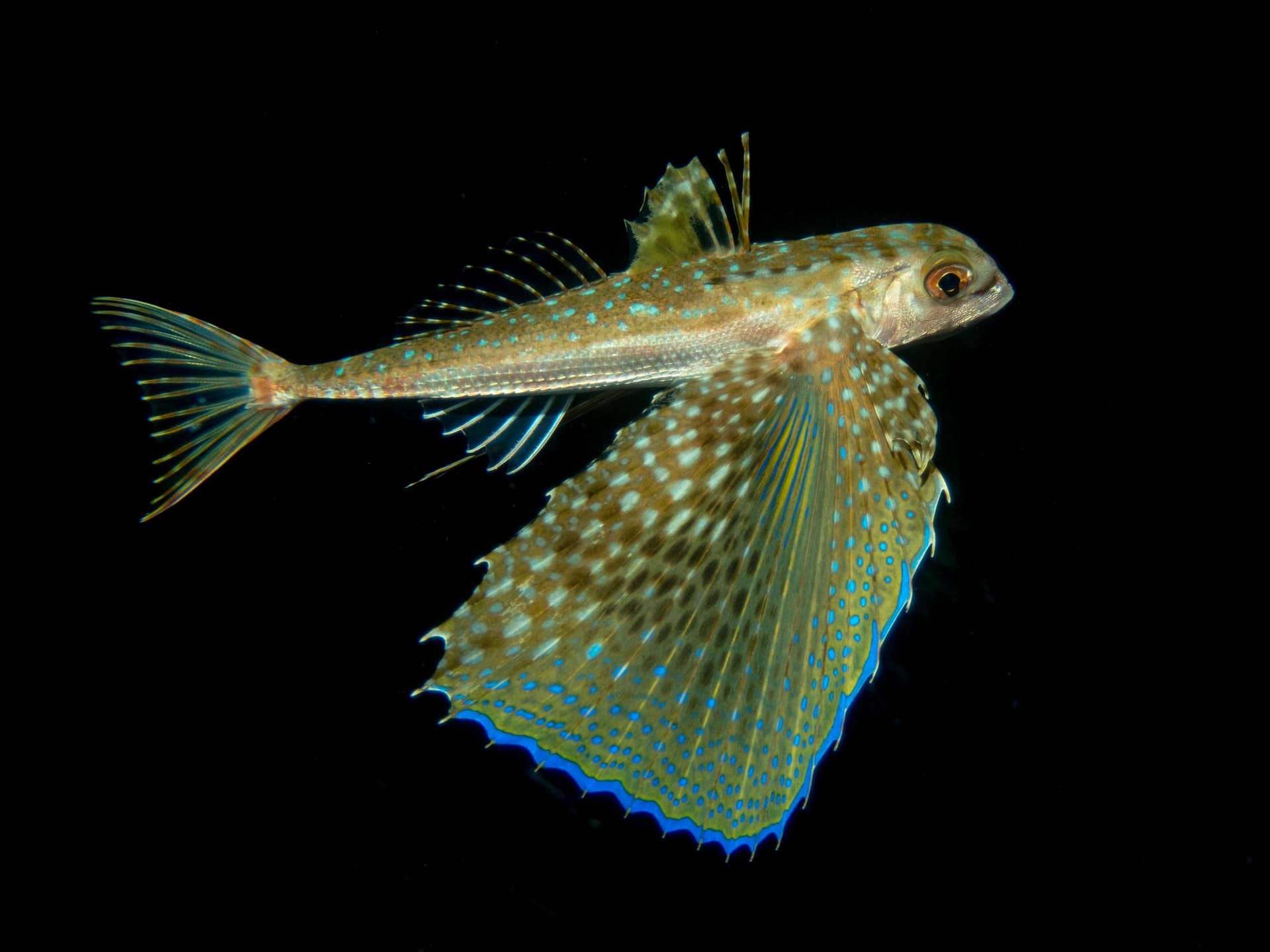
The Flying Gurnard (Dactylopterus volitans) is a unique marine fish known for its large, wing-like pectoral fins that spread out like wings when threatened.
Scientific Name
Dactylopterus volitans
Habitat
Found in tropical and subtropical Atlantic waters, usually along sandy bottoms, reefs, and coastal areas at moderate depths.
Conservation
Not currently listed as endangered, but habitat destruction and coastal pollution may affect local populations.
Lifespan
Estimated lifespan is around 5–8 years in the wild.
Fun Fact
Despite its name, the Flying Gurnard does not truly fly — it spreads its large fins to scare predators and appear bigger.
Diet
Carnivorous – feeds on small fish, crustaceans, shrimp, crabs, and other bottom-dwelling invertebrates.
Average Size
Can grow up to 18 inches (45 cm) in length.
Location / Placement info
Displayed in the Coastal Reef Exhibit, near the Ocean-View Tunnel
FAQ
What is the lifespan of Flying Gurnard?
Flying Gurnard typically lives 5–8 years in captivity with proper marine care.
What does Flying Gurnard eat?
Flying Gurnard is a carnivorous fish, feeding on small fish, shrimp, crabs, and other crustaceans.
Is Flying Gurnard aggressive?
Flying Gurnard is generally peaceful, but may eat smaller tankmates.
What is the ideal tank size for Flying Gurnard?
A minimum of 125 gallons is recommended due to the size and bottom-dwelling nature of Flying Gurnard.
Does Flying Gurnard need a specific environment?
Flying Gurnard prefers a marine tank with sandy substrate, open bottom space, and stable water conditions.
How big does Flying Gurnard grow?
Flying Gurnard can grow up to 18 inches (45 cm) in length.

 )
)