Fish Explorer
Discover the amazing aquatic life at Aqua Paradise
( )
)Frontosa Cichlid
Category: Freshwater Predator
About
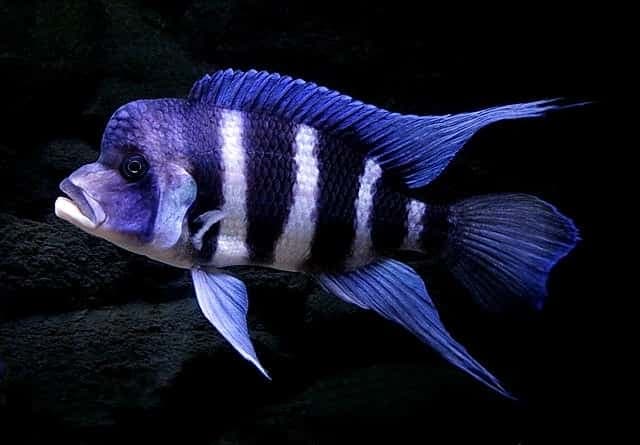
The Frontosa Cichlid is a large freshwater fish native to Lake Tanganyika in East Africa. It has a pale blue or whitish body with prominent dark vertical stripes and a distinctive hump on its forehead that becomes more noticeable as it grows. It is a slow-moving fish that lives among rocky areas and is popular in large aquariums.Scientific Name
Cyphotilapia frontosaHabitat
Freshwater rocky habitats in Lake Tanganyika, East Africa. It commonly inhabits deeper coastal waters, often around 10–50 metres deep, where it shelters and moves among rocky areas.Conservation
Near Threatened (NT) – according to the FishBase listing of the IUCN assessment dated 12 March 2025.Lifespan
Can live for well over 10 years in suitable aquarium conditions. Actual lifespan varies with water quality, diet, genetics and care.Fun Fact
It is native to Lake Tanganyika in Africa. 2. Its forehead hump becomes more prominent as it matures. 3. Its body features striking dark vertical stripes on a pale background.Diet
Carnivorous to omnivorous. In the wild, it feeds mainly on small fish and aquatic invertebrates, including snails and mussels. In aquariums, it can eat suitable sinking pellets and meaty foods formulated for large cichlids.Average Size
Up to approximately 33 cm (13 inches) in length.Location / Placement info
Displayed in the Coastal Reef Exhibit, near the Ocean-View TunnelFAQ
Where is the Frontosa Cichlid found?
The Frontosa Cichlid is native to Lake Tanganyika in East Africa.Why does the Frontosa Cichlid have blue and black stripes?
Its blue and black stripes give it a distinctive appearance and help identify this species.What does the Frontosa Cichlid eat?
It mainly eats small fish and other aquatic animals. In aquariums, it can be fed suitable fish food and protein-rich foods.How big can a Frontosa Cichlid grow?
It can grow up to around 12–14 inches (30–35 cm) in length, depending on its environment and sex.Why does the Frontosa Cichlid have a large bump on its head?
Adult Frontosa Cichlids often develop a prominent forehead hump, which becomes more noticeable as they mature.Recommended for you
Explore more from Aquarium Paradise and related picks tailored to this page.
