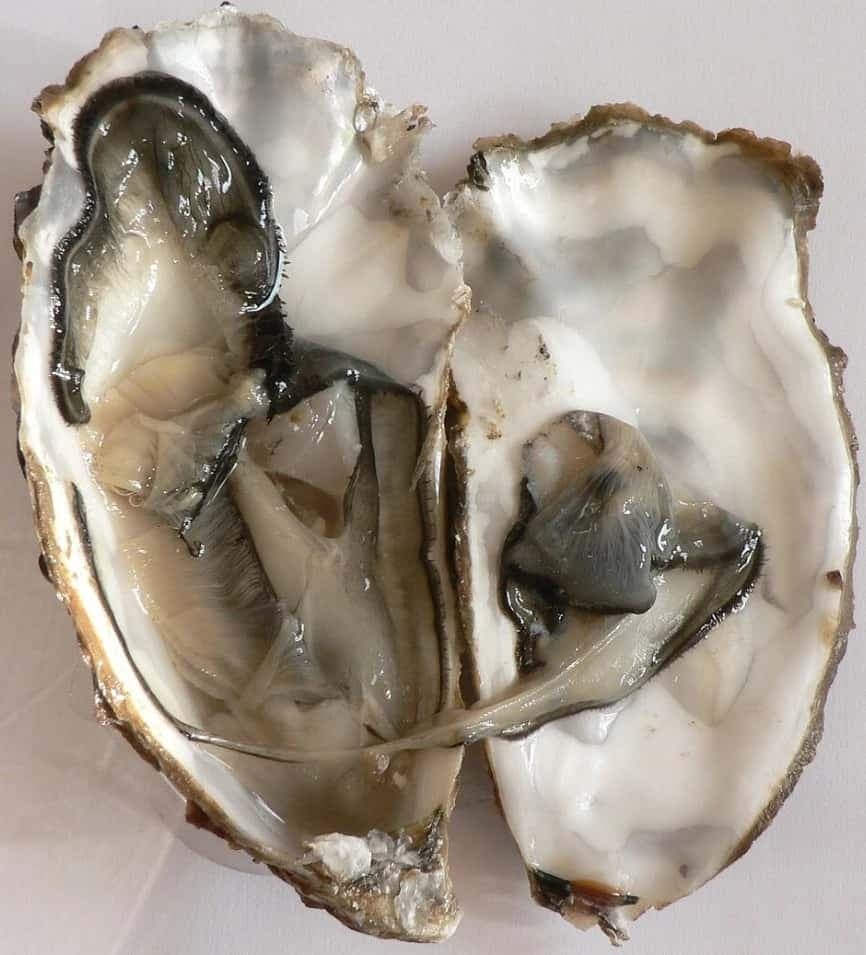
Oysters are marine bivalve mollusks known for their hard shells and ability to produce pearls. They are widely valued as seafood and for their ecological role in filtering water.
Scientific Name
Family: Ostreidae
Habitat
Found in coastal marine waters, estuaries, and brackish environments, often attached to rocks, reefs, or other hard surfaces.
Conservation
Many oyster populations are declining due to overharvesting, pollution, and habitat loss, but restoration projects are ongoing worldwide.
Lifespan
Typically live 10–20 years depending on species and environmental conditions.
Fun Fact
Some oysters can change their gender during their lifetime depending on environmental conditions.
Diet
Filter feeders – consume plankton, algae, and organic particles by filtering water.
Average Size
Usually range from 5–30 cm depending on species.
Location / Placement info
Displayed in the Coastal Reef Exhibit, near the Ocean-View Tunnel
FAQ
What is the lifespan of Oyster?
Oyster typically lives 10–20 years depending on the species and environment.
What does Oyster eat?
Oyster is a filter feeder, feeding on plankton, algae, and organic particles from water.
Is Oyster aggressive?
Oyster is non-aggressive and remains fixed to surfaces.
What is the ideal tank size for Oyster?
Oyster requires a well-maintained marine system with sufficient water volume rather than a specific tank size.
Does Oyster need a specific environment?
Oyster prefers a clean marine environment with good water flow and plankton-rich water.
How big does Oyster grow?
Oyster can grow up to 3–6 inches (7–15 cm) depending on the species.
Oyster – Habitat, Diet, Lifespan, Pearl Formation & Benefits

 )
)