.webp&w=1920&q=75)
Top 10 Fastest Fish in the World

Child Ticket - Aquarium Paradise

Adult Ticket - Aquarium Paradise

FUNWEDNESDAY – Buy 1, Get 1 Free
When you think of speed, you probably picture a cheetah sprinting across the savannah, not a fish gliding under the sea. It’s hard to imagine something underwater moving that fast, right? But here’s the surprise: some fish can swim almost as fast as a sports car.
Take the sailfish, for instance. Scientists have clocked it hitting speeds of up to 110 km/h (68 mph) in short bursts, nearly matching the cheetah’s top sprint on land. That’s not just quick; that’s blink-and-you-miss-it fast.
These underwater speedsters have evolved sleek, torpedo-shaped bodies, powerful tails, and razor-edged fins that slice through drag like blades through water. Every movement is about precision, power, and survival, whether it’s chasing prey or dodging danger.
In this article, we’ll dive into the 10 fastest fish in the world and learn the science that makes these marine racers some of the ocean’s most extraordinary athletes.
At a Glance:
- The Fastest Fish in the Ocean: The sailfish tops the list as the fastest fish in the world, reaching up to 110 km/h (68 mph), rivaling a cheetah’s sprint.
- Measuring Marine Speed: Scientists use biologging devices, high-speed cameras, hydrodynamic models, and field data to calculate fish velocity. This is to distinguish between burst speed (short sprints) and cruising speed (sustained travel).
- Built for Speed: Oceanic speedsters like the sailfish, black marlin, swordfish, shortfin mako shark, wahoo, bluefin and yellowfin tuna, blue shark, mahi-mahi, and tarpon share common design traits such as streamlined bodies and crescent-shaped tails.
- Habitat and Range:These fast fish thrive in warm, open oceans worldwide, often migrating thousands of kilometres across tropical, temperate, and pelagic waters for feeding and breeding.
- Conservation Urgency: Overfishing, climate change, and bycatch threaten many of these species. Sustainable fishing practices, marine protected areas, and international cooperation are essential for their survival.
- Experience Marine Life Up Close: At Aquarium Paradise, Bengaluru, visitors can explore over 65 aquatic species, a 180-foot underwater tunnel, and interactive exhibits, bringing the speed and beauty of ocean life to the surface.
How Fish Speeds Are Measured
Measuring how fast a fish swims sounds simple until you try it. Scientists employ four main approaches, and each yields slightly different results.
1. Biologging/Tagging
Tiny tags (accelerometres, GPS-linked satellite tags, pop-up archival tags) record speed, acceleration, and location on wild fish, giving real-world bursts and migration speeds. This method has produced direct burst measurements in large predators.
2. High-Speed Video and Tracking
Researchers film free-swimming fish (often in the lab or during controlled sea trials) and track their movement frame-by-frame to calculate peak and cruising speeds, a reliable method for capturing short, explosive sprints on camera.
3. Hydrodynamic and Biomechanical Models
Scientists estimate theoretical maxima from body shape, muscle physiology, and fluid dynamics (sometimes using wind-tunnel tests on mounted specimens) to see what’s physically possible. These models help explain why sailfish and swordfish are so slippery and fast.
4. Field Observations and Fisheries Data
Angler reports, sonar tracks, and observational records add practical context but can overestimate speeds if not measured rigorously.
A key distinction: Burst speed (a short, all-out sprint during a strike or escape) versus cruising speed (the steady pace used during migration).
Also read about the Indian Mottled Eel, a mysterious freshwater predator with snake-like grace and remarkable adaptability.
With the science of measuring speed clear, it’s time to discover which fish truly rule the ocean in the race for velocity.
The Top 10 Fastest Fish in Detail
Marine biologists have long studied how certain fish achieve extreme speeds, not only for hunting but also for long-distance migration and survival in open waters.
Factors such as body shape, muscle composition, and fin design all play key roles. Research shows that species with streamlined, torpedo-like bodies and lunate (crescent-shaped) tails experience less drag, allowing them to reach higher burst speeds.
Below is a detailed look at the ten fastest fish recorded to date and the adaptations that make each of them a master of movement.
1. Sailfish (Istiophorus Platypterus)
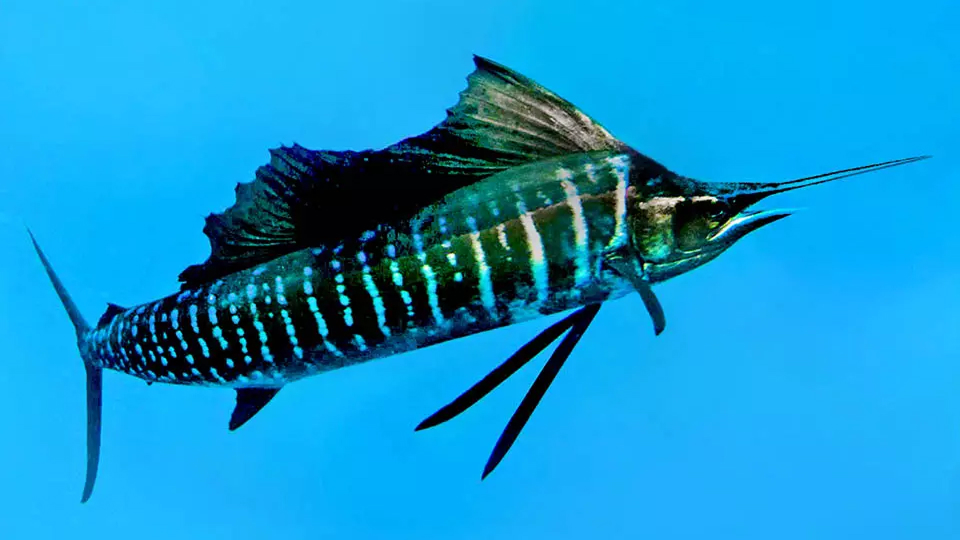
The sailfish is often heralded as the fastest fish in the ocean, with top speeds widely reported around 110 km/h (68 mph) in short bursts.
Fun Fact: It uses its large, sail-like dorsal fin to herd prey into tight schools and then strikes rapidly with its long, spear-like bill, turning a high-speed chase into a precision hunt.
Why It’s Built for Speed:
- Streamlined, torpedo-shaped body that minimises drag and cuts through water with minimal resistance.
- A long bill (much like a spear), which helps reduce hydrodynamic resistance and allows the fish to slash or stun prey with high precision.
- The dorsal “sail” can be retracted to reduce drag when sprinting and raised during hunting for manoeuvrability and possibly even thermal regulation.
Habitat: Sailfish are found across warm and temperate oceans, including the Atlantic and Indo-Pacific regions. They occupy open ocean and near-surface waters, often near schools of smaller fish such as sardines or mackerel.
2. Black Marlin (Istiompax Indica)
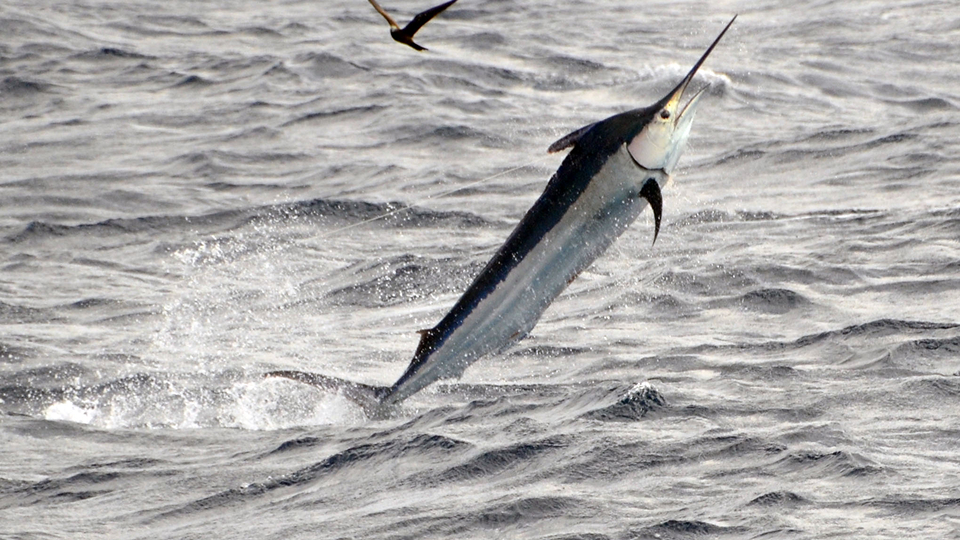
The black marlin is a powerhouse of the open ocean, often cited as one of the fastest fish. While older claims placed its top speed at up to 129 km/h(80 mph) in popular media, more reliable scientific modelling suggests far lower burst speeds, sometimes as low as ~36 km/h.
Fun Fact: This giant billfish is known for dragging fishing boats for hours in sportfishing contests; its strength and stamina are legendary among anglers.
Why It’s Built for Speed:
- A strong, deep-bodied frame combined with a long bill helps reduce drag and slice through the water.
- Its pectoral fins are rigid and can’t be folded flat against its body, which paradoxically may limit absolute top speed but supports explosive bursts and power.
- The crescent-shaped tail (lunate caudal fin) provides strong thrust for fast acceleration and agile movements.
Habitat: Black marlin are found in tropical and subtropical waters of the Indian and Pacific Oceans, often close to the surface or near islands and continental shelves. Their range extends roughly between 40° N and 45° S latitude.
3. Shortfin Mako Shark (Isurus Oxyrinchus)
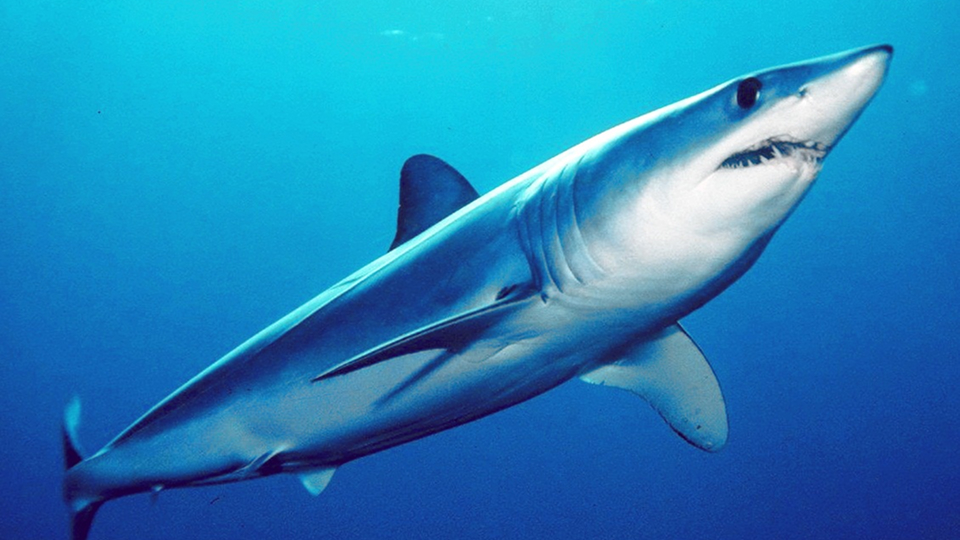
The shortfin mako shark is widely recognised as the fastest shark in the ocean, with burst speeds reported to be up to roughly 74 km/h (46 mph).
Fun Fact: This shark can leap spectacularly out of the water. Some jumps reach heights of 5–6 metres (15–20 ft). This demonstrates the significant amount of energy stored in its body before it even leaves the water.
Why It’s Built for Speed:
- A torpedo-shaped body and strongly forked (lunate) tail give this shark exceptional thrust and minimal drag.
- It possesses a heat-conserving circulatory system (rete mirabile) that allows it to maintain core muscle temperatures warmer than the surrounding water. This allows for quicker muscle contractions and improved stamina.
- Its skin features dermal denticles (tiny tooth-like structures), which reduce drag and turbulence, making its movement through water much more efficient.
Habitat: The shortfin mako is a pelagic predator found in tropical to warm-temperate waters worldwide. It often ranges from near the surface down to depths around 150 m or more, in open ocean zones far from shore.
4. Swordfish (Xiphias Gladius)
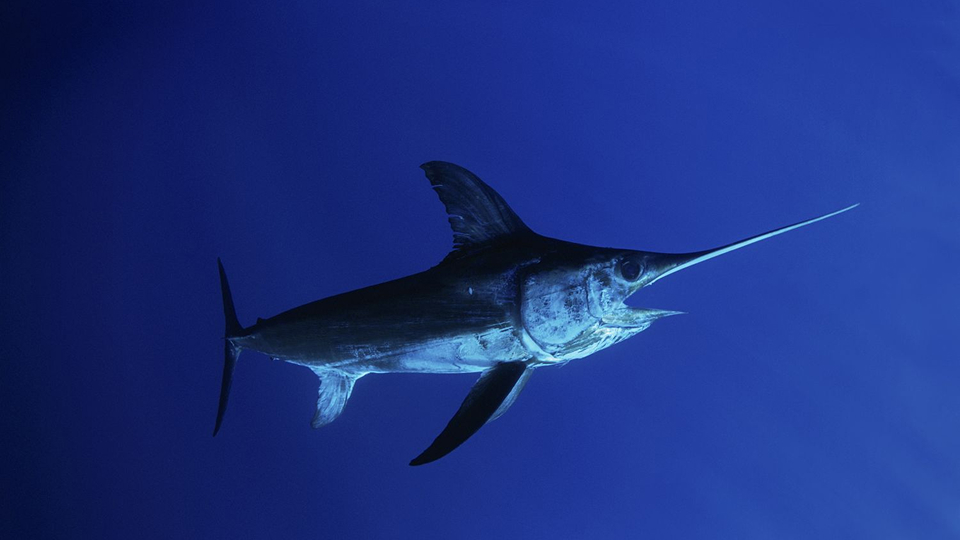
The swordfish is a large, highly migratory apex predator known for its long, flat “sword.” Reported burst speeds reach around 97 km/h (≈60 mph).
Fun Fact: This fish secretes a drag-reducing oil from pores near its head, enabling it to slice through the water more efficiently while chasing prey.
Why It’s Built for Speed:
- The streamlined, almost cylindrical body, combined with a long, flat bill (“sword”), reduces drag and serves as a hydrodynamic advantage.
- Specialized tissues behind its eyes function like a “space heater,” warming the brain and eyes to allow better vision and faster reaction times in cooler, deeper water.
- Powerful tail fin and high muscle density support both rapid “sprint” bursts and longer-range travel through the open ocean.
Habitat: Swordfish are found globally in tropical, temperate, and occasionally colder waters of the Atlantic, Indian, and Pacific Oceans. They’re highly migratory, diving into deep waters by day and feeding closer to the surface by night.
5. Wahoo (Acanthocybium Solandri)
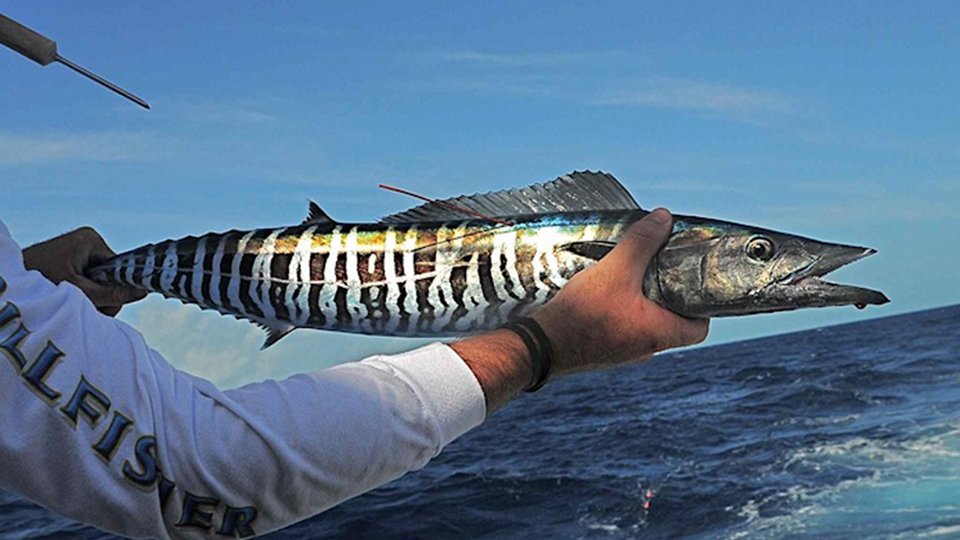
The wahoo is a streamlined, swift pelagic predator from the Scombridae family, often listed among the fastest fish in the ocean. It’s been estimated to swim up to 80 km/h (50 mph) in bursts.
Fun Fact: Anglers know the wahoo for its explosive initial run; one description notes that “the first scorching run may peel off several hundred yards of line in seconds”.
Why It’s Built for Speed:
- A long, fusiform (torpedo-shaped) body with a deeply forked tail and slender caudal peduncle minimises drag and maximises thrust.
- Like its tuna relatives, the wahoo has rigid gill structures that enable rapid oxygen intake, supporting bursts of high-speed swimming.
- It has sharp, serrated teeth and a large mouth, allowing it to strike quickly at smaller schooling fish or squid; speed is essential for successful hunts.
Habitat: The wahoo inhabits tropical and subtropical open oceans worldwide (Atlantic, Indian, and Pacific). It often stays near surface waters or around structures (reefs, seamounts) and can dive to moderate depths when hunting.
6. Bluefin Tuna (Thunnus Thynnus)
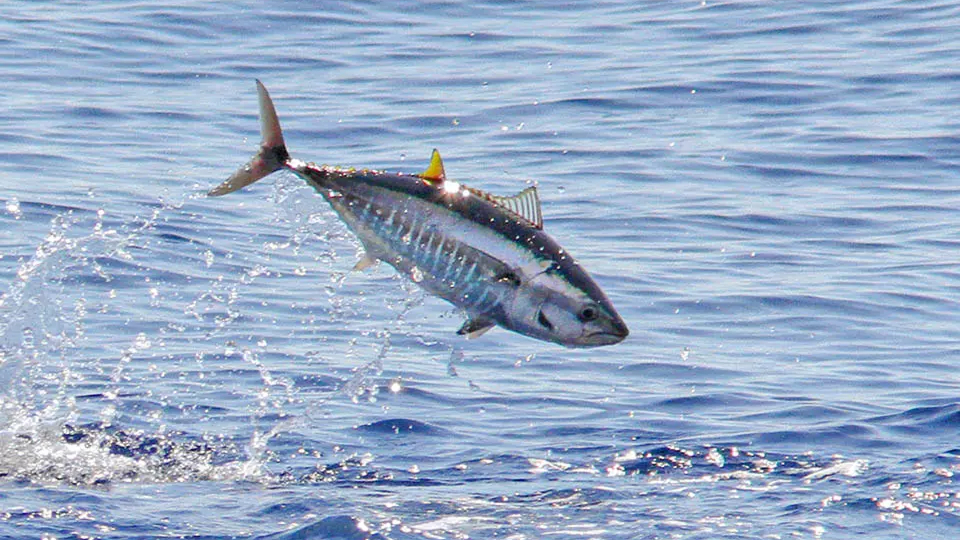
The Atlantic Bluefin Tuna is a powerhouse of the open ocean; a large, muscular predator built for speed and endurance. Reported top speeds vary: some sources list up to 100 km/h (62 mph) during bursts. Other, more conservative estimates suggest a speed of around 65 km/h during normal pursuit.
Fun Fact: Unlike most fish, Bluefin tuna are warm-blooded (endothermic). They maintain body temperature above ambient water temperature, enabling them to swim faster, dive deeper, and chase prey more effectively in calmer waters.
Why It’s Built for Speed:
- Torpedo-shaped body and strong crescent (lunate) tail fin deliver powerful thrust and minimal drag.
- A heat-exchange system (rete mirabile) helps conserve and distribute muscle heat, resulting in improved muscle performance and faster reaction times.
- High muscle density, large pectoral and caudal fins, and continuous swimming behaviour give this fish the power for explosive bursts of speed. It’s equally built for endurance, allowing it to cruise effortlessly across vast ocean distances.
Habitat: Bluefin tuna roam vast regions of the Atlantic and Mediterranean. They migrate thousands of kilometres between feeding and spawning grounds, often traversing open ocean and dealing with both warm surface waters and colder depths.
Also learn about the Indian Gar Fish: an ancient river predator with armour-like scales and a design built for stealth and strength
7. Blue Shark (Prionace Glauca)
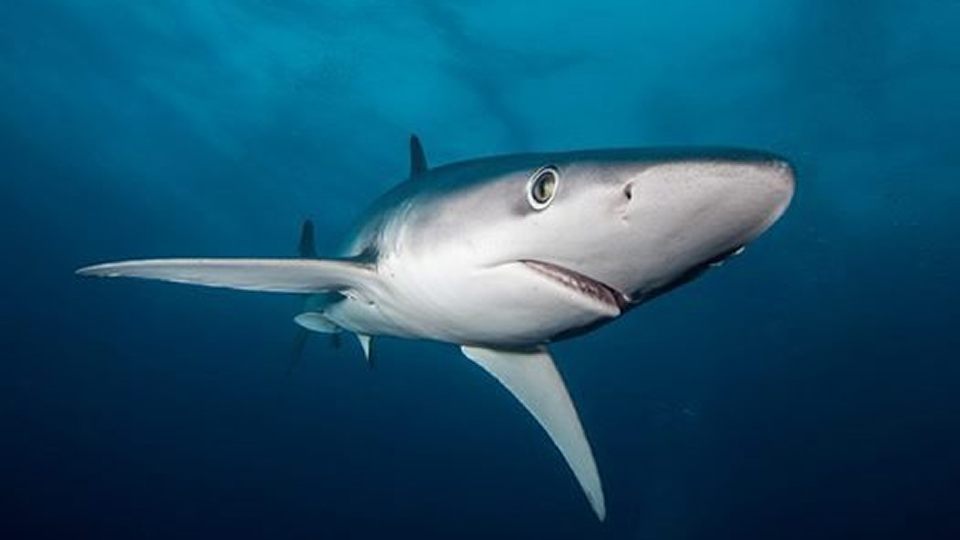
The blue shark is a sleek, ocean-roaming predator often cited as one of the fastest sharks. It has reported burst speeds up to 69 km/h (43 mph) in small individuals under ideal conditions.
Fun Fact: Despite its speed claims, tracking studies show that typical swimming speeds are much lower; one study recorded mean speeds of only 1.3–3.7 km/h when averaging across more extended periods of travel.
Why It’s Built for Speed:
- The body is elongated and torpedo-shaped, with long, narrow pectoral fins and a pointed snout, allowing it to cut through water efficiently.
- Its large, crescent tail fin gives it strong propulsion when needed for bursts.
- While not always moving at top sprinting speeds, its physiology supports long-distance migration and rapid manoeuvres when chasing prey or avoiding danger.
Habitat: Blue sharks inhabit temperate and tropical open oceans worldwide, typically far from shore in pelagic zones, ranging from near the surface to depths of over 1,000 metres, depending on the region.
8. Mahi-Mahi (Coryphaena Hippurus)
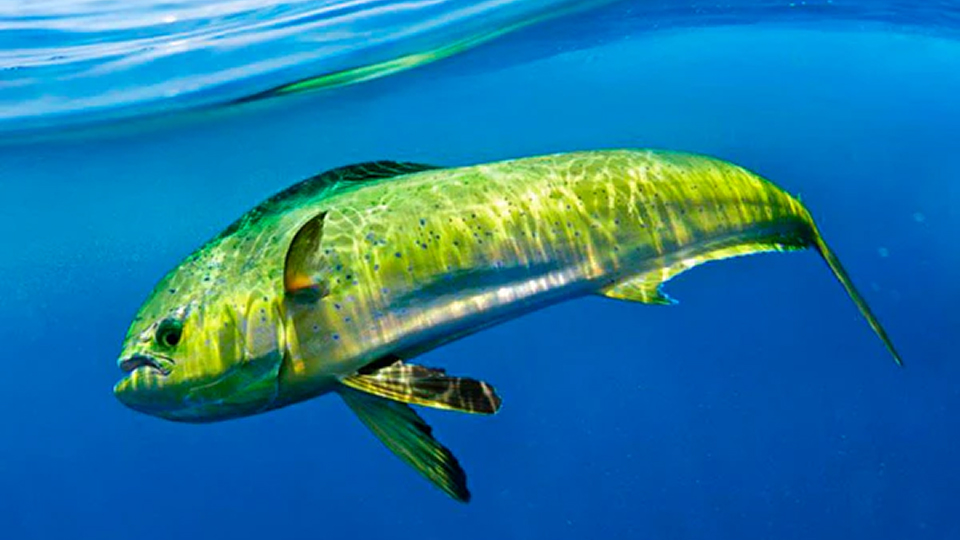
The mahi-mahi (also called dorado or dolphinfish) is a vibrant, high-energy pelagic fish renowned for its speed. Reports suggest top swimming speeds of up to 93 km/h (57.5 mph).
Fun Fact: In its first year and a half, a mahi-mahi can grow over 4 feet (1.2 m) and often hunts by leaping, twisting, and darting after flying fish and squid near the surface.
Why It’s Built for Speed:
- Its body is long, slender, and torpedo-like, minimising drag while allowing agile bursts.
- A deeply forked tail and narrow caudal peduncle provide strong thrust, enabling rapid sprints.
- Mahi-mahi often live near floating debris or seaweed patches, where they need stealth, quick acceleration, and high manoeuvrability to catch prey or evade predators.
Habitat: Mahi-mahi roam tropical and subtropical offshore waters worldwide; in the Atlantic, Indian, and Pacific Oceans. They stay near the surface, often around floating debris, such as seaweed lines or drifts.
9. Tarpon (Megalops Atlanticus)
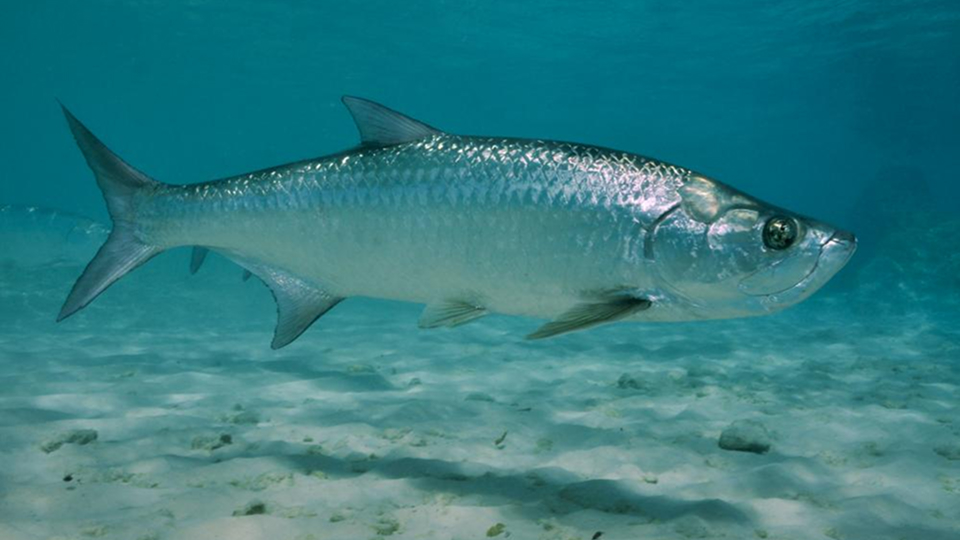
The tarpon, nicknamed the “Silver King,” is known more for its spectacular leaps and fighting strength than official speed records. While documented burst-speed data are scarce, some sources suggest it can reach speeds of up to 40 km/h (25 mph) during rapid surface bursts.
Fun Fact: Tarpon are superb aerial performers; when hooked or threatened, they can launch high out of the water, flip, and splash back down in dramatic style, making them a prized game fish.
Why It’s Built for Speed:
- It has a strong, elongate fusiform body tapering into a deep, forked tail fin, which provides effective thrust for bursts.
- Large, upturned mouth and fine-scaled shimmering silver sides reduce drag and aid in quick surface accelerations.
- Its modified swim bladder also allows it to gulp air and survive even in oxygen-poor waters; this versatility aids sudden movements and access to habitats less crowded by rivals.
Habitat: Tarpon inhabit warm coastal habitats, including bays, estuaries, mangrove lagoons, and sometimes freshwater rivers. They span tropical and subtropical Atlantic waters, from near Nova Scotia down to Brazil, and often display migratory behaviour.
10. Yellowfin Tuna (Thunnus Albacares)
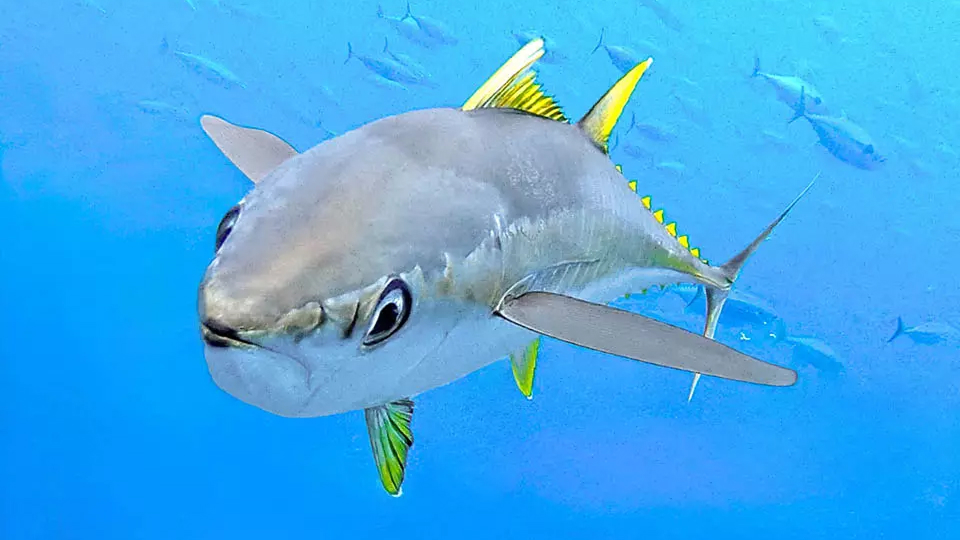
The yellowfin tuna is a sleek, powerful ocean-roamer prized by fishermen and scientists alike. It’s capable of burst speeds of up to 80 km/h (50 mph) when accelerating after prey.
Fun Fact: This species can retract its fins into grooves along its body to reduce drag, allowing for faster acceleration during chases.
Why It’s Built for Speed:
- Its body is long, fusiform (torpedo-shaped), with a very slender caudal peduncle and crescent-shaped tail; perfect for fast thrusts and sustained swimming.
- The species has a heat-exchange internal system (like other tunas) that keeps core muscle temperature above ambient water, allowing rapid muscle output even in cooler layers.
- Its fins can fold into grooves, smoothing the outline and reducing drag during high-speed movement.
Habitat: Yellowfin tuna inhabit tropical and subtropical waters around the world. They are epipelagic (near-surface) and roam vast distances across the open ocean, typically in mixed-size schools and often associating with floating objects or debris.
After meeting the ocean’s fastest swimmers, it’s clear that speed alone can’t protect them. Many of these species now face challenges that even their incredible agility can’t outrun.
Conservation Corner: Protecting the Ocean’s Speedsters
Even the fastest fish cannot escape the growing pressures of overfishing, climate change, and habitat degradation. Species such as tunas, marlins, sailfish, and sharks are increasingly vulnerable due to intensive commercial harvesting and accidental bycatch.
When their populations decline, it affects prey species and disrupts entire ocean ecosystems.
To safeguard these vital predators and the balance they maintain, several key conservation measures have proven effective:
- Sustainable fishing: Techniques such as pole-and-line fishing help minimise bycatch and protect juvenile stocks.
- Marine Protected Areas (MPAs): Properly managed sanctuaries provide safe breeding and feeding grounds, allowing populations to recover.
- International cooperation: Agreements through global fisheries management bodies are vital, as many of these species migrate across national boundaries.
How individuals can contribute:
- Choose ethically sourced seafood verified by sustainable fishing labels.
- Avoid products derived from threatened species.
- Support policies and organisations promoting ocean conservation.
Protecting these remarkable swimmers ensures that the oceans remain healthy, balanced, and full of life.
To understand why protecting these creatures matters, it helps to see the ocean’s diversity up close. Visiting marine centres, aquariums, or watching ocean documentaries reveals the beauty and complexity of life beneath the waves.
Discover the Ocean’s Most Fascinating Species
If you’ve ever wanted to explore the ocean without leaving the city, The Aquarium Paradise, located on Jayamahal Main Road, Opp. TV Tower, J.C. Nagar, Bengaluru, brings the underwater world to life in a way few places can.
Designed to educate, inspire, and awe, it offers an immersive glimpse into marine ecosystems, from glowing jellyfish to graceful sharks gliding overhead. It is open daily from 10:30 AM to 8:00 PM (last entry 7:15 PM).
Here’s what makes this aquatic experience truly unforgettable:
- Underwater Tunnel: Step into India’s longest 180-foot glass tunnel, where you’re surrounded by sharks, rays, and shimmering schools of fish. It’s a breathtaking walk-through that gives you the feeling of standing right inside the ocean.
- Mermaid Show: Watch the underwater world come alive with live mermaid performances, held on Wednesdays, Saturdays, and Sundays. These shows blend fantasy and artistry, making them a highlight for both children and adults.
- Jellyfish Room: A visitor favourite; the Jellyfish Room glows with soft, pulsating light as dozens of jellyfish drift in illuminated tanks. The tranquil rhythm of their movement creates a dream-like, almost meditative atmosphere.
- Ocean Window Lounge: Relax and dine while gazing into expansive aquarium tanks at the Ocean Window Lounge. Whether it’s a family outing or a quiet moment with friends, it’s the perfect place to pause and take in the serenity of marine life.
- Interactive Feeding Sessions: Get closer to aquatic life through feeding talks and demonstrations, where caretakers share fascinating insights into species like eels, stingrays, and other marine inhabitants. These sessions are both educational and engaging, especially for younger visitors.
- Diverse Marine and Freshwater Exhibits: With over 65 species across saltwater and freshwater zones, you can spot vibrant reef fish, exotic seahorses, turtles, rays, and even predatory species that reveal the incredible diversity of the underwater world.
*Ticket Prices: ₹499/₹599 for adults, ₹449/₹549 for kids (80–140 cm), and free for children below 80 cm.
Conclusion
The ocean’s fastest fish aren’t just marvels of motion; they’re reminders of how much life exists beyond what we see. Each one, from the razor-sharp sailfish to the mighty mako shark, tells a story of power and purpose.
However, as the tides change, their stories depend on ours. Choosing to learn, care, and act is how we maintain that balance. If this journey through the sea’s speedsters has sparked your curiosity, don’t let it end on a screen.
Step into the deep for yourself at the Aquarium Paradise to see how marine life truly moves, adapts, and lives beyond the surface.
Book your tickets today and experience the ocean’s most fascinating creatures up close!
FAQs
1. What is the fastest fish in the world?
The sailfish holds the record as the fastest fish, capable of reaching speeds up to 110 km/h (68 mph) in short bursts. Its streamlined body and long, pointed bill help it cut through water with incredible precision.
2. How do scientists measure the speed of fish?
Researchers use tagging devices, underwater cameras, and hydrodynamic models to track the speed at which fish swim. These tools capture both short bursts (used for hunting or escaping) and steady cruising speeds.
3. Can any of the fast fish be seen in aquariums?
Most high-speed pelagic fish, such as sailfish, marlins, and tunas, are rarely kept in aquariums due to their size and open-ocean lifestyle. However, many aquariums display similar species that showcase the same body design and adaptations.
4. Why is speed so important for fish?
Speed helps fish hunt efficiently, escape predators, and migrate across vast distances. It’s a key survival trait in the open ocean, where reaction time can mean life or death.
5. How can we help protect these species?
You can support ocean conservation by choosing sustainably sourced seafood, avoiding products made from threatened species, and supporting marine sanctuaries and responsible aquariums that promote education and preservation.
More To Read

6.17.2025
Top 10 Largest Crab Species Worldwide
Compare the largest crab in the world like the Japanese Spider and Coconut Crab. Explore traits, habitats, and conservation efforts. Click to know more!
%201.webp&w=1920&q=75)
9.4.2025
Top 20 Kids' Fun Places in Bangalore in 2026
Find the best kids’ fun places in Bangalore in 2026, from Aquarium Paradise and Snow City to Cubbon Park and Bannerghatta. Indoor & outdoor picks for every age.
5.22.2025
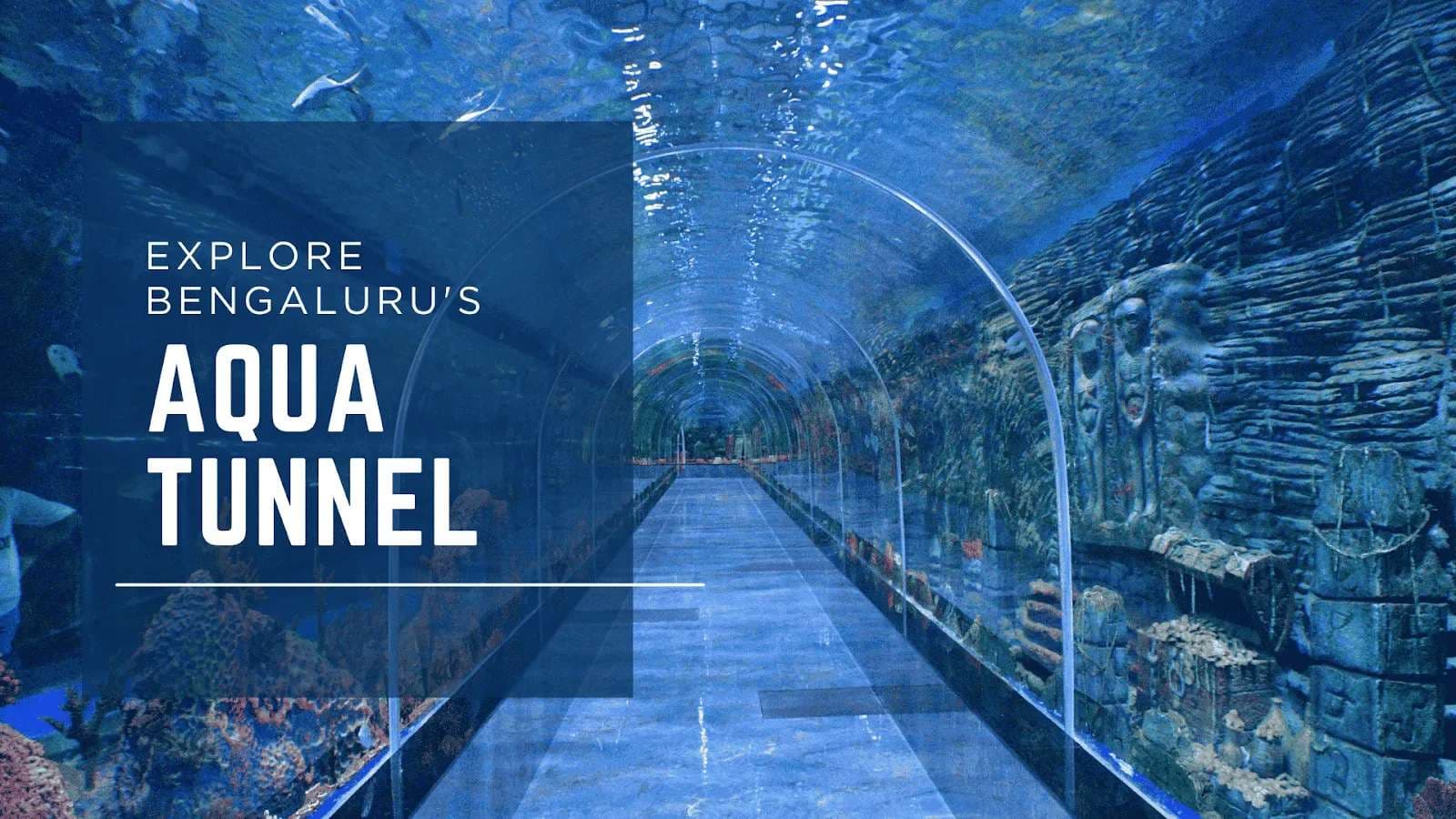
Explore the Mesmerizing Aqua Tunnel in Bengaluru
Discover Bengaluru's Aqua Tunnel, a top tourist spot with stunning aquatic displays and interactive experiences. Plan your visit today!

5.16.2025
Mesmerising Little Mermaid Shows Near You
Discover the magic of Aquarium Paradise in Bangalore with its unique underwater tunnel, mermaid show, and interactive marine experiences. Get more info here.
Recommended for you
Explore more from Aquarium Paradise and related picks tailored to this page.
