%201.webp&w=3840&q=75)
22 Fun Team Building Activities for Large Groups That Actually Work

Child Ticket - Aquarium Paradise

Adult Ticket - Aquarium Paradise

FUNWEDNESDAY – Buy 1, Get 1 Free
Discover fun team building activities for large groups in Bangalore, from indoor games to outdoor offsites that make team outings more engaging.
At some point, every team ends up in the same situation. Someone needs to plan an outing for a large group, and what sounds simple at first quickly becomes complicated.
You’re not planning for five people who already know each other well. You’re planning for 20, 50, sometimes even 100+ people with different energy levels, different interests, and very different ideas of what “fun” looks like. That’s where most team outings fall apart.
Some become too passive, where people just sit, eat, and leave. Others try too hard with forced activities that feel more like an obligation than an experience. And then there are the ones that are overplanned, where logistics take over, and the actual experience gets lost. This guide avoids that.
Instead of just listing options, it focuses on fun activities for large groups that actually create interaction without forcing it. The kind of experiences where people naturally talk, react, and share something, without needing a structured agenda to make it happen.
Key Takeaways
- The best fun activities for large groups are the ones that create natural interaction instead of forcing participation.
- Bangalore offers a wide mix of options, from in-city team outings and indoor experiences to outdoor camps and longer offsites.
- Indoor activities work well for large teams because they are easier to organise, weather-proof, and more accessible for mixed groups.
- Outdoor and outstation experiences tend to create stronger team bonding because they shift people away from their usual work environment.
- The right team outing depends less on the number of activities and more on choosing an experience that fits your group’s energy, size, and time available.
Easy Team Outings Without Leaving Bangalore
Some of the best team outings don’t need a two-hour drive, a packed bag, or a Monday morning regret about the commute back. When you’re planning for a large group, convenience isn’t just a bonus; it’s what determines whether the plan actually works.
These experiences are all within Bangalore, bookable in advance, and designed to handle groups. That means the logistics, entry flow, activity structure, and even food can be managed without turning the outing into a coordination exercise.
1. Aquarium Paradise
.webp)
Most team outings are built around energy, competition, or constant activity. Aquarium Paradise works because it does the opposite.
Opened in March 2025 inside the Fun World complex at JC Nagar, it’s India’s only aquarium with a 180-foot underwater tunnel where sharks, rays, sea turtles, and jellyfish move around and above your team at the same time. The effect is immediate, the pace slows, conversations shift, and people start reacting to the space instead of following a schedule.
That shift matters for large groups. It removes the pressure to participate and replaces it with a shared experience that feels natural. You don’t need icebreakers when the environment itself becomes the conversation.
For corporate groups, the setup is practical. Dedicated group bookings, customisable packages, and the option to combine with Fun World or Snow City in the same complex make planning straightforward. The indoor, air-conditioned environment ensures it works across seasons, and the on-site Ocean View Restaurant handles group meals without needing external coordination.
For teams that are used to high-energy outings, this offers something different, a quieter, more immersive experience that still brings people together.
Key Attractions
- The 180-foot underwater tunnel creates a shared walkthrough experience where your entire team moves together, surrounded by marine life on all sides.
- Themed zones like Egyptian, Mayan, and sunken ship sections add variety, making the experience feel layered rather than linear.
- Live Mermaid Shows and scuba diver interactions bring the space to life at intervals, giving groups natural moments to gather and watch together.
- The Ocean View Restaurant allows teams to extend the outing into a relaxed meal without leaving the venue.
Things to Know Before the Visit
- Book group tickets in advance; popular slots fill quickly, especially on weekends.
- Time your visit around the Mermaid Show (1 PM, 3 PM, 5 PM, 7:40 PM) for a more complete experience.
- The indoor setup makes it ideal for summer and monsoon planning.
- Combine with nearby attractions for a full-day outing without additional travel.
2. Fun World Bangalore
.webp)
Fun World is what happens when you stop trying to control the flow of the outing and instead give your team a space where the day organises itself.
Spread across 24 acres in the same JC Nagar complex, the park brings together multiple zones: the amusement park, Water World, Snow City, and Wow World. For large groups, that variety is what makes it work. Not everyone wants the same thing, and here, they don’t have to.
Some will head straight to high-thrill rides like the Sky Drop or roller coasters. Others will move toward the water park, wave pools, and slides. A few will stay with the more relaxed, family-friendly rides. The key is that everyone stays within the same ecosystem without needing constant coordination.
Key Attractions
- Over 100 rides across thrill, family, and kids’ categories ensure that different team preferences are naturally accommodated.
- The Water World section adds a second layer of engagement with wave pools, slides, and group-friendly splash zones.
- High-intensity rides like drop towers and roller coasters create shared adrenaline moments that teams remember and talk about later.
- The open layout allows teams to move freely without rigid coordination, making it easier to manage large groups.
Things to Know Before the Visit
- Arrive early (before 11 AM) to make the most of the day.
- Nylon swimwear is mandatory for water rides; inform your team in advance.
- Lockers are available with a refundable deposit.
- Pre-book corporate packages to streamline entry and coordination.
3. Snow City Bangalore
.webp)
Snow City is one of those experiences that sounds unusual on paper and then becomes instantly clear the moment your team steps inside.
Located within the same Fun World complex at JC Nagar, it recreates a controlled snow environment at around 5°C, complete with snow slides, igloos, and a short snow dance floor session. For large groups, the appeal is immediate; everyone reacts at the same time. That’s what makes it effective as a team activity. It doesn’t require planning, instructions, or coordination.
The experience is short (around 45 minutes), structured enough to keep things moving, and different enough to leave a lasting impression. It also works well as part of a combined outing. Teams often pair it with Aquarium Paradise or Fun World, turning a single activity into a half-day or full-day plan without needing additional travel.
Key Attractions
- The snow environment creates an instant shared reaction, making it easy for large groups to engage without structured activities.
- Snow slides, tubing zones, and open play areas allow teams to interact casually rather than follow a fixed flow.
- The snow dance floor with lighting and music adds a high-energy finish to the session.
- Add-ons like MadLabs and Eyelusion extend the experience beyond a single activity, making it more complete.
Things to Know Before the Visit
- Each session is limited to ~45 minutes, so plan your group slots in advance.
- Thermal jackets, gloves, and boots are included, but socks are mandatory (carry your own).
- Works best when combined with nearby attractions for a longer outing.
- Ideal for teams looking for a short, high-impact experience rather than a full-day plan.
4. Escape Rooms (Breakout / Mystery Rooms)
 1.webp)
Escape rooms are one of the few team activities that naturally force collaboration without feeling forced.
Spread across locations like Koramangala, Indiranagar, and Whitefield, these experiences divide large groups into smaller teams, each locked into a themed room where they solve puzzles under time pressure.
What makes them effective is the structure. Everyone has to participate, communicate, and contribute, but it feels like a game, not a task.
For large teams, running multiple rooms simultaneously keeps the experience efficient and competitive.
Key Attractions
- Puzzle-based challenges require real-time communication and teamwork.
- Multiple rooms allow large groups to participate simultaneously.
- Competitive element between teams adds energy to the experience.
- Themes (prison break, mystery, horror) keep the experience engaging.
Things to Know Before the Visit
- Book slots in advance, especially for large groups.
- Split teams strategically for better engagement.
- Arrive 15–20 minutes early for briefing.
- Best suited for teams open to interactive challenges.
5. Go-Karting (Meco Kartopia / Torq03 / Red Riders)
 1.webp)
If your team leans toward high-energy, competitive experiences, go-karting is one of the most reliable choices.
Tracks like Meco Kartopia (Bangalore’s most well-known circuit), Torq03, and Red Riders offer structured racing formats where individuals or teams compete in timed laps.
The appeal is simple, it’s fast, competitive, and instantly engaging. Even those who don’t race tend to stay involved, watching, cheering, and comparing lap times.
For large groups, this creates both participation and spectatorship, which keeps everyone engaged without needing constant coordination.
Key Attractions
- High-speed racing creates instant excitement and competition within teams.
- Time-based lap formats allow fair comparison and engagement.
- Spectator-friendly setup keeps non-participants involved.
- Multiple tracks and formats make it scalable for large groups.
Things to Know Before the Visit
- Follow safety instructions strictly; helmets and gear are mandatory.
- Pre-book for large groups to avoid waiting time.
- Works best in cooler hours (evenings preferred).
- Combine with nearby dining for a more complete outing.
Outside the City: Team Outings That Actually Feel Like a Break
Some team outings need distance. Not just from the office, but from the rhythm of the city itself. Once you move 60–500 km out of Bangalore, the environment changes enough for people to disconnect from routine and engage differently with each other.
These are the kinds of outings where time slows down a little. You’re not rushing between activities. You’re spending a full day, sometimes even a night, in a space that allows conversations, shared experiences, and a more natural team dynamic to develop.
6. Nature Adventure Camp, Kanakapura
 1.webp)
If your team outing needs a balance between structure and freedom, this is one of the most reliable options just outside Bangalore.
Located around 70 km from the city, Nature Adventure Camp in Kanakapura sits in a forested, lake-facing setting that immediately changes the pace of the day. You’re not moving between locations or managing logistics; everything happens within one space, but with enough variety to keep large groups engaged.
What makes it work particularly well for large teams is the combination of outdoor adventure and downtime. You move between ziplining, rope courses, trekking, and water-based activities, but you also have time to sit, eat, and interact without a schedule dictating every minute. It’s active, but not overwhelming. Structured, but not rigid.
Key Attractions
- A wide mix of activities like ziplining, rappelling, rope courses, and trekking ensures teams stay engaged throughout the day.
- Water-based experiences like kayaking, swimming, and rain dance add a relaxed and social element to the outing.
- The campsite setting near a lake and forest creates a natural break from city routine, which changes how teams interact.
- Bonfire evenings and open spaces allow for unstructured conversations and group bonding beyond activities.
Things to Know Before the Visit
- Activities are usually rotated in groups, making it suitable for large teams without overcrowding.
- Carry comfortable clothing, sports shoes, and essentials for outdoor activities.
- Overnight stays include tents or dorm-style accommodation with common washrooms.
- Best planned as a full-day outing or overnight experience rather than a short visit.
7. Skandagiri Sunrise Trek (70 km from Bangalore)
 1.webp)
If your team outing needs something that actually feels earned, not scheduled, Skandagiri is where that shift happens.
Located around 60–70 km from Bangalore near Chikkaballapur, this is one of the few sunrise treks where the experience begins before the day does. Most groups leave the city late at night, reach the base by early morning, and start the climb in the dark, which completely changes the dynamic of the outing.
You’re not just arriving somewhere. You’re working toward it together. The trail itself is moderately challenging, around 5–6 km round trip, with rocky sections and gradual inclines that require coordination and pacing.
For teams, this works differently from resorts or indoor activities. Conversations happen along the climb. People help each other through sections. The shared effort becomes the experience. It’s not the easiest outing. But that’s exactly why it stands out.
Key Attractions
- The sunrise view from the summit, often above a layer of clouds, creates one of the most visually rewarding experiences near Bangalore.
- The night-to-morning transition trek adds a unique layer, where teams move together in low-light conditions before sunrise.
- Rocky trails and gradual climbs require coordination, making the experience naturally collaborative.
- Panoramic views from the top include surrounding hills like Nandi Hills and open landscapes.
Things to Know Before the Visit
- Forest permits are mandatory and limited; book at least a few days in advance.
- Carry a flashlight or headlamp, as most of the climb happens in low light.
- Wear proper trekking shoes; the terrain can be uneven and rocky.
- Start early and plan transport carefully, as timing directly impacts the sunrise experience.
8. Ramanagara Cycling Trip with Water Activities (50 km from Bangalore)
 1.webp)
If your team wants something active without committing to a full trek or overnight trip, Ramanagara cycling sits right in that middle ground.
Located about 50 km from Bangalore on the Mysore Road route, Ramanagara offers a landscape that feels different the moment you arrive, with rocky hills, open countryside, and quiet stretches that are built for movement rather than crowds.
What makes this experience work for teams is the progression. You start with a shared activity, cycling through the terrain together, and then shift into a more relaxed second half with water activities like kayaking and swimming at a nearby resort.
That balance is important. It creates both effort and downtime in the same outing. Teams push through the ride, then slow down, sit, eat, and interact more naturally afterward.
It’s not extreme. It’s not passive. It sits right in the middle, which is exactly why it works for large groups.
Key Attractions
- The cycling trail moves through rocky hills, forest edges, and open countryside, making the ride visually engaging rather than repetitive.
- The mix of on-road and off-road sections keeps the experience accessible but still slightly challenging for teams.
- Water activities like kayaking and swimming provide a relaxed second half after the cycling effort.
- The overall structure combines activity and downtime, making it suitable for mixed-energy groups.
Things to Know Before the Visit
- The cycling difficulty is moderate, suitable for beginners with basic fitness.
- Carry sports shoes, comfortable clothing, and an extra set for water activities.
- Start early to avoid heat and traffic on the return journey.
- Works best as a one-day outing with pre-booked group packages.
9. Drum Circle Experience at Discovery Village, Kanakapura (38 km from Bangalore)
Most team activities ask people to compete. This one asks them to listen.
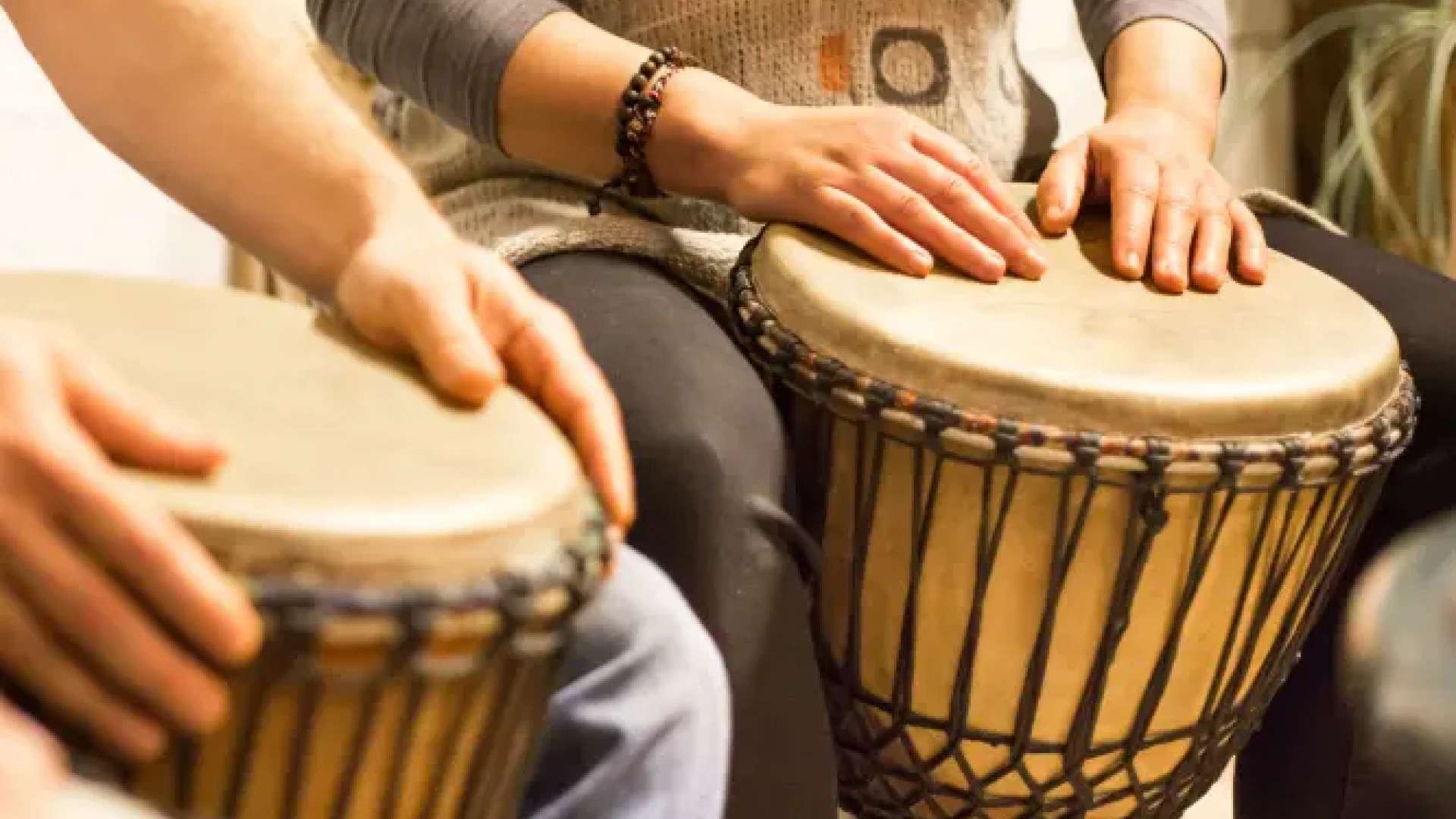
A Drum Circle gathers the entire group in one space, hands everyone a Djembe or percussion instrument, and has a facilitator guide the team from individual beats into a unified rhythm. What starts as noise, everyone hitting at their own pace, gradually synchronises into something that actually sounds good. That shift happens in front of the group, and it happens because of the group. No one can opt out without the whole thing falling apart.
For large teams, that's exactly the point. It doesn't require physical ability, competitive spirit, or prior experience. It simply requires paying attention to the people around you, which is a harder ask than it sounds after months of back-to-back meetings.
Discovery Village on Kanakapura Road, 38 km from Bangalore, is the most established venue to experience this near the city. Their high-energy drum sessions use African-style Djembes and run as part of a structured corporate day outing, alongside archery, ropes courses, and other activity stations. It works particularly well as an afternoon session after the physical activities are done and the team's energy needs a different kind of outlet rather than a quieter one.
Key Attractions
- The format removes the usual pressure to perform. There's no scoreboard, no correct answer, and no one standing on the side watching. Everyone participates at the same level, which changes the group dynamic quickly.
- Discovery Village's location near the Bannerghatta National Park adds a forest backdrop that makes the open-air drum session feel different from anything you'd organise in a conference room.
Things to Know Before the Visit
- Book the drum session in advance when reserving the Discovery Village day outing package; it's offered as a premium add-on based on group size and availability.
- For in-city groups that can't travel to Kanakapura, SOSParty facilitates Drum Circle sessions directly at your preferred venue across Bangalore, including hotels, office spaces, and resort banquet halls.
- Combine with the Nature Adventure Camp at Kanakapura for a full-day plan that balances both high-energy outdoor activities and a strong group experience.
10. Kanva Dam Day Outing Package (65 km from Bangalore)
 1.webp)
Kanva Dam is one of those places that sits just far enough from Bangalore to feel like a break, but not far enough to require serious planning.
Located near Channapatna in the Ramanagara district, this outing combines open water, green landscapes, and structured activities into a single-day experience. What makes it work particularly well for large teams is that everything is built into the flow, you’re not figuring out what to do next, the day is already planned for you.
The experience typically begins with arrival and breakfast, followed by a rotation of adventure activities like ziplining and rope courses. By midday, the pace shifts toward water-based activities like kayaking, swimming, and even rain dance sessions, creating a balance between effort and relaxation.
For teams, that balance matters. You get enough activity to keep everyone engaged, but also enough downtime for conversations, meals, and group interaction without structure taking over.
It’s not as intense as a trek or as passive as a resort; it sits right in between, which is exactly why it works for large group outings.
Key Attractions
- A structured mix of rope activities like ziplining, Burma bridge, and ladder walk keeps teams engaged without overwhelming them.
- Water-based experiences such as kayaking, swimming, and rain dance create a relaxed second half of the outing.
- The dam-side setting with open views and greenery adds a natural break from the city environment.
- Pre-planned schedules and included meals make it easy to manage large groups without extra coordination.
Things to Know Before the Visit
- Activities are rotated in groups, making it suitable for large teams without crowding.
- Carry an extra set of clothes for water activities and comfortable footwear.
- Transportation can be included from common pickup points if booked in advance.
- Best planned as a full-day outing rather than a short visit.
11. Kinvah Vineyards (Nandi Valley –35 km from Bangalore)
 1.webp)
This is the most structured and reliable winery experience near Bangalore, especially if you want grape stomping included without extra coordination.
Located near Nandi Hills, Kinvah offers a complete 3-hour experience that combines a vineyard walk, guided winery tour, wine tasting, and grape stomping. The experience is designed as a fixed flow, which makes it easy for both small groups and corporate outings.
The grape stomping here isn’t just a quick add-on; it’s integrated into the experience, along with lunch and tasting sessions, making it feel like a proper half-day outing.
Key Attractions
- A guided vineyard and winery tour that walks you through the entire wine-making process from grape to bottle.
- Grape stomping is part of the experience, making it interactive rather than just observational.
- Wine tasting session with multiple varieties, allowing teams to explore different flavours together.
- A structured yet relaxed format that naturally encourages conversation and group interaction.
Things to Consider
- Grape stomping is seasonal and works best during harvest months (typically Jan–March).
- Advance booking is recommended, especially for weekends and corporate groups.
- The experience is more relaxed than activity-heavy outings, so it suits teams looking for a slower pace.
- Best planned as a half-day outing, and can be combined with a Nandi Hills drive.
12. Gokarna River Rafting (460 km from Bangalore)
 1.webp)
If your team outing needs to feel like a real break, not just a day away from work, Gokarna works for a very different reason. The distance itself changes the rhythm of the trip. By the time your group gets there, the city has already fallen away, the pace has slowed, and people are naturally more present with each other than they usually are in a half-day outing.
That is what makes this kind of destination useful for teams. A longer ride gives people time to settle into the experience, talk outside their usual work roles, and start interacting more naturally. By the time you add rafting into the plan, the outing no longer feels like a scheduled activity. It starts feeling like a shared trip.
Rafting near Gokarna adds the energy that balances out the slower coastal setting. You get a stretch of adventure that needs coordination and group involvement, but the larger experience still leaves room for beach time, casual meals, and those quieter moments where teams actually start feeling more connected.
Key Attractions
- Rafting on the Kali River with moderate rapids that balance thrill and accessibility for groups.
- Scenic route through Western Ghats forests with coastal views, making the experience visually distinct.
- Easy to combine with Dandeli rafting and jungle stays for a more complete off-site plan.
- A mix of adventure and relaxation, with beaches, cafés, and short treks adding variety to the trip.
Things to Consider
- This is best planned as a 2–3 day outing, not a quick trip from Bangalore.
- Rafting intensity depends on water release and seasonal conditions; confirm before booking.
- Combine with Dandeli for a stronger adventure-focused itinerary.
- Travel time is long, so overnight travel or early departure is recommended.
Fun Team Building Games for Large Groups in Bangalore That Get Everyone Involved
Planning for a large team in Bangalore is usually less about finding any activity and more about finding one that works for the group. The best fun activities for large groups are the ones that are easy to run, engaging from the start, and flexible enough to fit different team dynamics.
These games work well for corporate teams because they create interaction quickly without needing a complicated setup. Whether you’re planning for an office session, a resort outing, or a half-day team event, the focus is simple: get people involved, keep the energy up, and make the experience feel natural.
13. Treasure Hunt (Themed Team Challenge)
 1.webp)
Treasure hunts are one of the most reliable formats when you’re planning for large groups in Bangalore. They scale easily, keep teams moving, and create just enough structure without making the experience feel rigid.
Teams are divided into smaller groups and given a series of clues that lead them across checkpoints. These can be simple location-based hints or fully themed narratives, depending on how immersive you want the experience to be. What makes it effective is that every team moves at its own pace, solving problems differently while still being part of the same activity.
For corporate teams, it naturally brings out leadership, delegation, and quick decision-making without needing formal instruction.
Key Attractions
- Clue-based progression keeps teams engaged and constantly moving across checkpoints.
- Can be customised with themes like detective, survival, or company-specific storytelling.
- Encourages leadership, delegation, and collaborative problem-solving.
- Works well across office spaces, resorts, and outdoor venues
Things to Consider
- Requires pre-planning and setup for smooth execution.
- Works best with facilitators for large groups.
- Ideal duration: 60–120 minutes, depending on complexity.
14. Tower of Hanoi (Strategy & Coordination Challenge)
 1.webp)
The Tower of Hanoi is simple in concept but becomes significantly more engaging when done as a team activity.
Using a large physical setup, teams must move discs across poles following strict rules. What starts as a quick attempt usually turns into a structured discussion, where teams plan steps, assign roles, and execute carefully.
For large groups, it works well as a short but focused activity that highlights how teams approach problem-solving under constraints.
Key Attractions
- Encourages structured thinking and step-by-step planning.
- Requires clear communication and role distribution.
- Works well as a competitive challenge between teams.
- Highlights different problem-solving approaches within groups.
Things to Consider
- Best used as a short activity (15–30 minutes).
- Needs a facilitator to explain rules and monitor progress.
- Works well when combined with other activities.
15. Helium Stick Challenge
 1.webp)
This is one of the most deceptively simple activities and consistently one of the most engaging for large groups.
A lightweight stick is placed on participants’ fingers, and the team is asked to lower it to the ground. What usually happens instead is the stick rises, creating confusion, laughter, and repeated attempts before teams figure out how to align.
It’s less about the task and more about how quickly teams realise the need for coordination.
Key Attractions
- Instantly highlights communication gaps within teams.
- Forces coordination and collective alignment.
- Works as a strong icebreaker for large groups.
- Minimal setup with high engagement value.
Things to Consider
- Best used early in the session to break hesitation.
- Works best in groups of 10–20 per round.
- Requires clear instructions to avoid confusion.
16. Key Punch (Speed & Memory Game)
 1.webp)
Key Punch is a fast-paced activity that combines memory, coordination, and speed.
Teams are given numbered markers placed randomly, and they must touch them in sequence as quickly as possible. Most teams rush the first attempt and fail, then pause, strategise, and improve on subsequent rounds.
That shift from chaos to coordination is what makes the activity effective.
Key Attractions
- Combines memory, speed, and coordination in a single challenge.
- Encourages teams to plan before execution.
- Highly competitive and time-driven.
- Works well across multiple rounds to improve performance.
Things to Consider
- Requires open space for setup.
- Works best when repeated for the learning effect.
- Ideal as a mid-session energy activity.
17. Heads & Tails (Large Group Icebreaker)
 1.webp)
Heads & Tails is one of the simplest ways to activate a large group quickly without overcomplicating the setup.
Participants choose between two options and move physically based on their choice. With each round, the group narrows down, creating energy and engagement without requiring any preparation.
It works particularly well at the start of a session when people are still settling in.
Key Attractions
- Quick and effective icebreaker for large groups.
- Gets everyone moving and participating instantly.
- Works well for 50–100+ participants.
- No setup required, easy to execute anywhere.
Things to Consider
- Best used at the beginning of an event.
- Not suitable as a standalone activity.
- Requires a facilitator to maintain pace and flow.
18. Themed Team-Based Events (Custom Challenges)
 1.webp)
If you want to move beyond standalone games, themed team-based events are where things start to feel more complete.
Instead of running one activity at a time, these experiences combine multiple challenges into a single narrative, survival missions, business simulations, reality-show formats, or creative storytelling setups. Teams move through different stages, solving tasks that connect back to the overall theme.
For large groups in Bangalore, this format works well because it keeps the entire team engaged over a longer duration without feeling repetitive.
Key Attractions
- Combines multiple activities into one structured experience.
- Can be customised around company goals, roles, or themes.
- Encourages both creative and analytical thinking.
- Keeps large groups engaged over longer durations.
Things to Consider
- Requires professional facilitators or event organisers.
- Needs advance planning and coordination.
- Best suited for half-day or full-day sessions.
19. Paintball (High-Energy Tactical Activity)
 1.webp)
Paintball is one of the most popular outdoor team activities for large groups, especially when the team is open to something physical and competitive.
Teams are divided into groups and compete in tactical scenarios, capturing zones, defending bases, or eliminating opponents. The activity is fast-paced, requires coordination, and creates instant engagement.
Even those not actively playing often stay involved by watching and reacting, which keeps the overall group energy high.
Key Attractions
- High-energy gameplay that keeps teams actively engaged.
- Encourages strategy, communication, and quick decision-making.
- Builds trust and coordination under pressure.
- Creates strong shared experiences and post-activity discussions.
Things to Consider
- Safety gear and a briefing are mandatory before gameplay.
- Not ideal for everyone due to physical intensity.
- Works best in outdoor or dedicated adventure setups.
20. Archery & Target-Based Activities (Precision Games)
 1.webp)
Archery and similar target-based activities offer a slower, more focused contrast to high-energy games.
Participants take turns aiming at targets, competing individually or in teams based on accuracy. These activities are often included in resorts and outdoor camps as part of a larger activity lineup.
For large groups, they work well as rotation-based activities that allow steady participation without crowding.
Key Attractions
- Focus-driven activity that balances high-energy games.
- Easy to rotate across large groups without delays.
- Safe, structured, and instructor-led.
- Adds variety to the overall team outing experience.
Things to Consider
- Works best as a secondary or filler activity.
- Requires proper supervision and setup.
- Not ideal as a standalone primary activity.
21. Pass the Hoop / Pass the Ball Challenge
 1.webp)
Team Building Activities | Foliage Outdoors
This is a simple activity that becomes increasingly complex as the group size grows.
Teams stand in a line or circle and must pass a hoop or ball across without breaking formation. What sounds straightforward quickly turns into a coordination challenge, especially with larger teams.
The activity forces teams to adapt, communicate, and rethink their approach in real time.
Key Attractions
- Encourages coordination and teamwork under constraints.
- Simple concept with surprisingly high engagement.
- Works well as both an icebreaker and a mid-session activity.
- Easily scalable for large groups.
Things to Consider
- Requires open space for movement.
- Best done in smaller teams within a large group.
- Works better with facilitation and time-based rounds.
22. Icebreaker Relay Games (Quick Rotation Challenges)
 1.webp)
Relay-style games are useful when you want to keep energy levels high without introducing complex rules.
These involve short, timed challenges, passing objects, completing small tasks, or moving through mini-obstacles, where teams compete in quick succession. The format keeps things moving and prevents drop-offs in engagement.
For large groups, this is one of the easiest ways to maintain momentum throughout the session.
Key Attractions
- Fast-paced and easy to understand for all participants.
- Keeps energy levels consistently high across the group.
- Encourages participation without requiring deep strategy.
- Works well as filler between larger activities.
Things to Consider
- Best used in combination with other activities.
- Requires a facilitator to manage transitions smoothly.
- Ideal for short bursts of engagement (10–20 minutes).
Final Words
What makes a team outing worth planning is rarely the number of activities on paper. It is whether the day gives people something they would not have found inside the office, a different pace, a shared challenge, a lighter conversation, or just enough distance from routine to make the team feel more human around each other.
That is really what these ideas are meant to help with. Some are built around movement and energy, others around slower interaction, and a few work because they give teams both without making the day feel overdesigned. So if you are planning the next outing, start there. Think less about filling every hour and more about what kind of experience your team will actually respond to right now.
And if you want an option that is easy to organise, different enough to stand out, and simple to build a group plan around, Aquarium Paradise is a strong place to begin.
FAQs
1. What are the best fun activities for large groups in Bangalore?
Some of the best options include indoor experiences like Aquarium Paradise, Snow City, and escape rooms, along with outdoor choices like Kanakapura camps, Ramanagara cycling, paintball, and resort-based team games.
2. How do you choose the right team outing for a large group?
Start with your team’s size, energy level, and available time. Indoor activities work better for easy logistics and mixed groups, while outdoor and offsite plans are better when you want deeper interaction and a stronger break from routine.
3. Are team building activities for large groups better in the city or outside Bangalore?
It depends on the kind of experience you want. In-city outings are easier to organise and work well for half-day plans, while destinations outside Bangalore feel more like a proper break and usually create stronger team bonding.
4. What is the ideal group size for team building activities?
Most activities can be adapted for different team sizes, but formats usually work best when larger groups are split into smaller teams. That makes participation easier and keeps the experience more engaging.
5. How far in advance should you book a team outing in Bangalore?
For large groups, it is best to book at least 1–2 weeks in advance. Popular venues, outdoor camps, and weekend slots tend to fill quickly, especially for teams that need transport, meals, or custom group packages.
Recommended for you
Explore more from Aquarium Paradise and related picks tailored to this page.

%201.webp&w=3840&q=75)