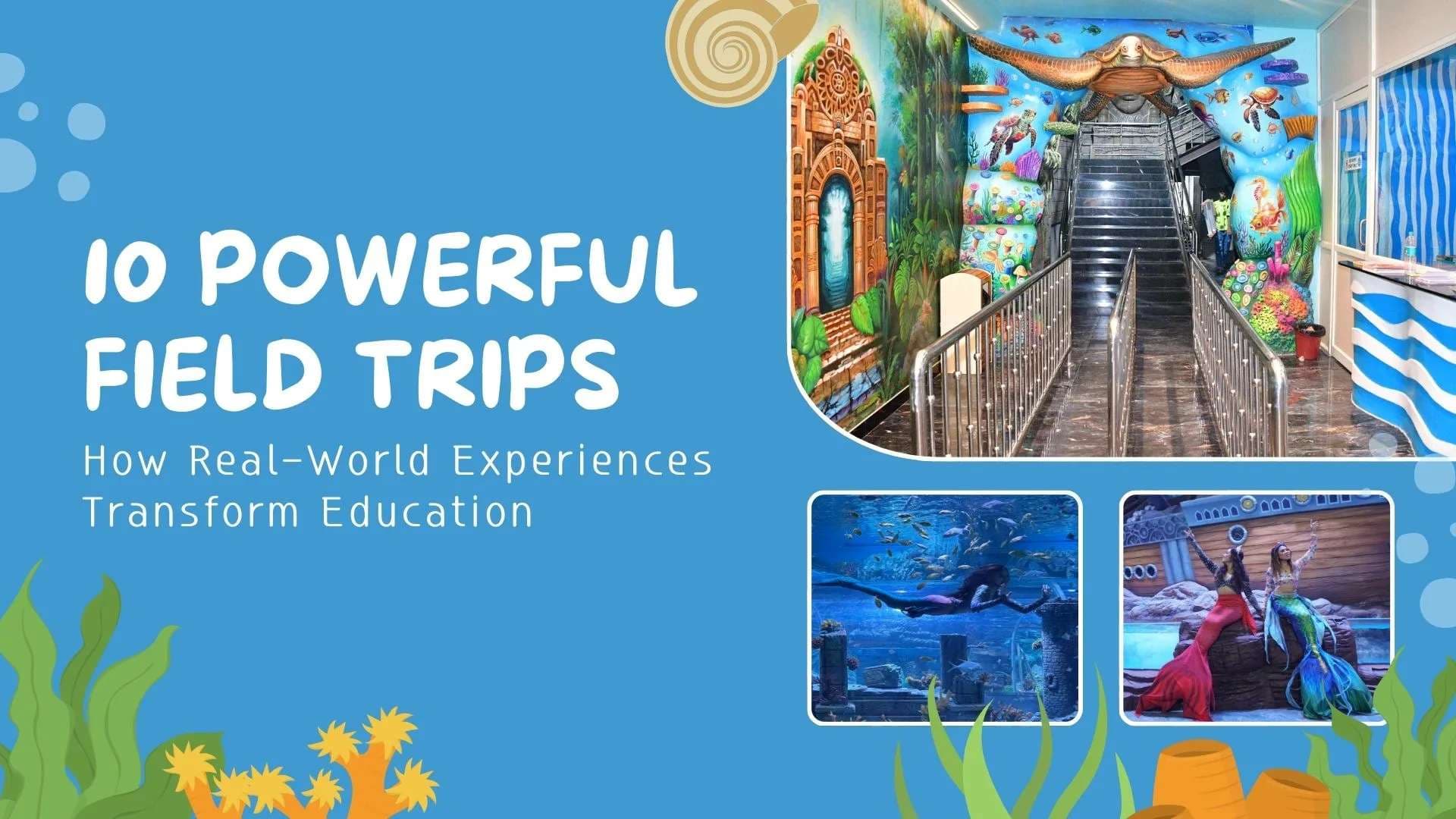
10 Powerful Field Trips: How Real-World Experiences Transform Education
Real-world experiences transform education by making concepts visual, sensory, and memorable, far more impactful than textbooks.

Child Ticket - Aquarium Paradise

Adult Ticket - Aquarium Paradise

FUNWEDNESDAY – Buy 1, Get 1 Free
A chapter can teach what? But learning sticks when students get the why and how in front of them, in places where ideas become real, sensory, and memorable.
That’s why classrooms alone often fall short. Reading about history isn’t the same as standing where it happened. Studying ecosystems isn’t the same as hearing birds, noticing patterns, and connecting cause to effect in real time. Experiences turn passive information into something students can use.
Research backs this up. In a large-scale randomised controlled study of school museum visits, students who went on the trip showed measurable gains in outcomes schools care about, including critical thinking (about 0.33 standard deviations) and increases in tolerance and historical empathy compared with students who didn’t go.
Field trips bridge the gap between theory and real life, and they give students the kind of learning that doesn’t end when the bell rings.
Key Highlights
- Real-world experiences make learning stick, helping students understand concepts through observation, interaction, and emotional connection, something classrooms alone can’t replicate.
- Research-backed evidence shows that field trips improve critical thinking, empathy, and retention, proving that experiential learning has measurable academic and social benefits.
- Powerful field trips are structured, sensory-rich, and age-appropriate, ensuring students stay engaged, feel safe, and can directly connect classroom lessons to real environments.
- A wide range of destinations, museums, gardens, sanctuaries, farms, factories, aquariums, and more, transform abstract topics into living experiences, shaping curiosity and long-term understanding.
- Aquarium Paradise in Bengaluru stands out as an immersive educational destination, offering underwater tunnels, rare marine species, interactive touch experiences, and structured zones ideal for school learning.
What Makes a Field Trip Truly Powerful?
Not every outing becomes a learning moment. The most impactful field trips aren’t just “a day out”, they’re designed experiences that help students connect what they learn in class to what exists in the real world. When a trip checks the right boxes, it becomes easier for students to stay curious, retain concepts longer, and participate more actively.
Here’s what separates an average field trip from a truly powerful one:
- Hands-on observation: Students learn more when they can see concepts in action, whether it’s watching a process, spotting patterns, or noticing details they’d miss in a textbook. Real-world observation builds a stronger understanding because it’s rooted in evidence, not just explanation.
- Multi-sensory engagement: The best learning experiences involve more than listening. When students can look closely, move through a space, interact with objects, and take in sights and sounds, learning becomes more immersive and far more memorable.
- Age-appropriate learning: A strong field trip meets students where they are. The activities, language, and complexity should match their age group, so the experience feels exciting, not confusing or overwhelming.
- Safe, structured environments: Powerful field trips have clear guidance, defined learning zones, and smooth supervision. When students feel safe and the environment is well-organised, they’re more focused, more engaged, and better able to learn without distractions.
Also Read: 10 Most Dangerous Fish in the World
10 Powerful Field Trips That Transform Learning
The best field trips don’t just “add fun” to the school calendar; they turn lessons into lived experiences. Each option below is chosen because it helps students observe, connect, and remember concepts far beyond the classroom.
1) Science Museums
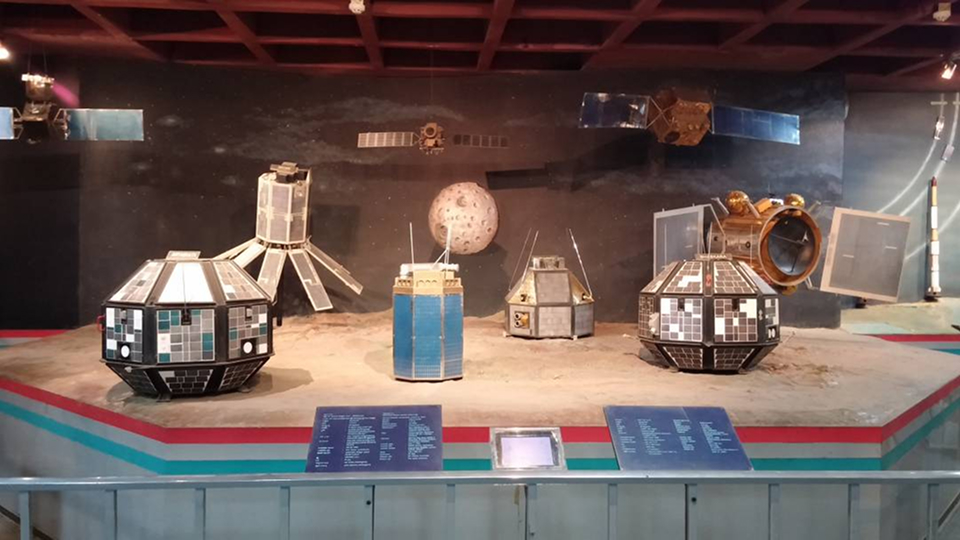
Science clicks faster when students can test ideas instead of only reading about them. These trips are ideal for curiosity-led learning across grades.
- Interactive exhibits: Forces, motion, sound, electricity, and simple machines become clear through live demos and hands-on stations.
- Problem-solving zones: Puzzle labs and challenge corners build critical thinking through “try, fail, improve” learning.
2) Aquariums & Marine Life Centres
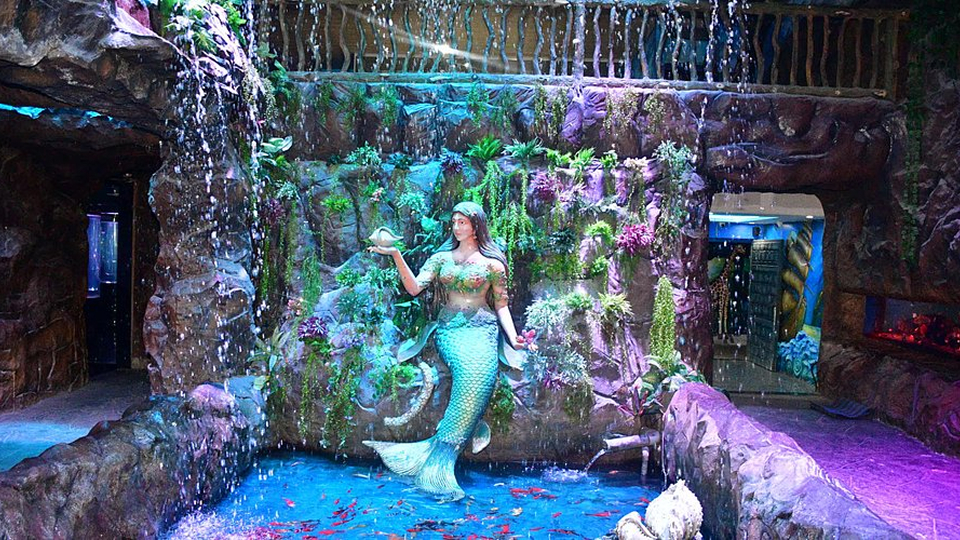
Aquariums make marine science accessible by bringing underwater ecosystems into view. Students can grasp habitats, food chains, and biodiversity through real observation.
- Ecosystem learning: Predator–prey relationships, camouflage, adaptation, and habitat differences become easy to explain.
- Structured exploration: Clear zones support guided learning, worksheets, and safe student movement.
Aquarium Paradise features India’s longest underwater tunnel and showcases rare/unique marine life, giving students an immersive way to observe marine ecosystems up close. It also offers interactive experiences like feeding stingrays and touching starfish, which makes learning more hands-on and memorable for school groups.
3) Botanical Gardens
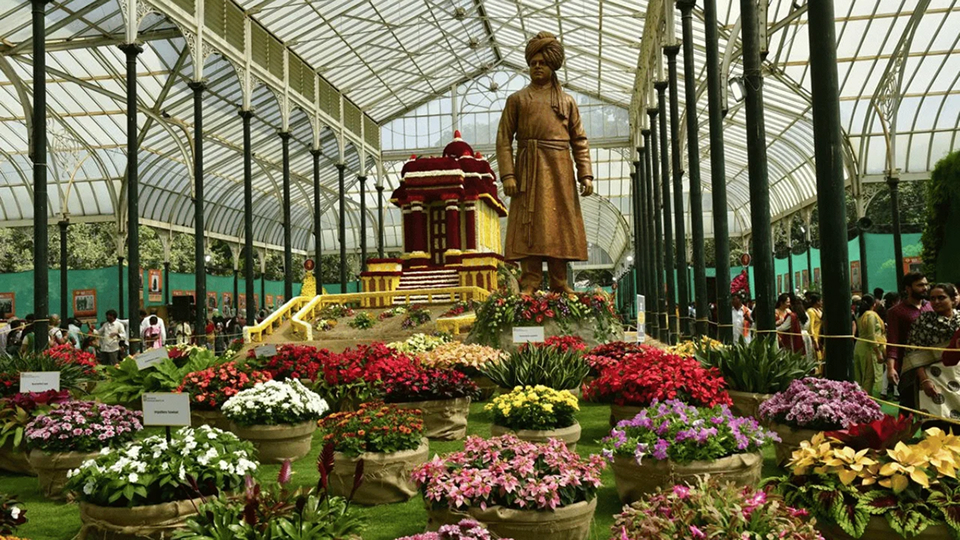
Botanical gardens teach science in a calm, natural setting where students can observe patterns everywhere. Great for biology, EVS, and sustainability learning.
- Ecosystems up close: Pollination, plant adaptations, native vs invasive species, and biodiversity become visible.
- Sustainability learning: Composting, water conservation, and ecological zones connect concepts to real-world action.
4) Planetariums
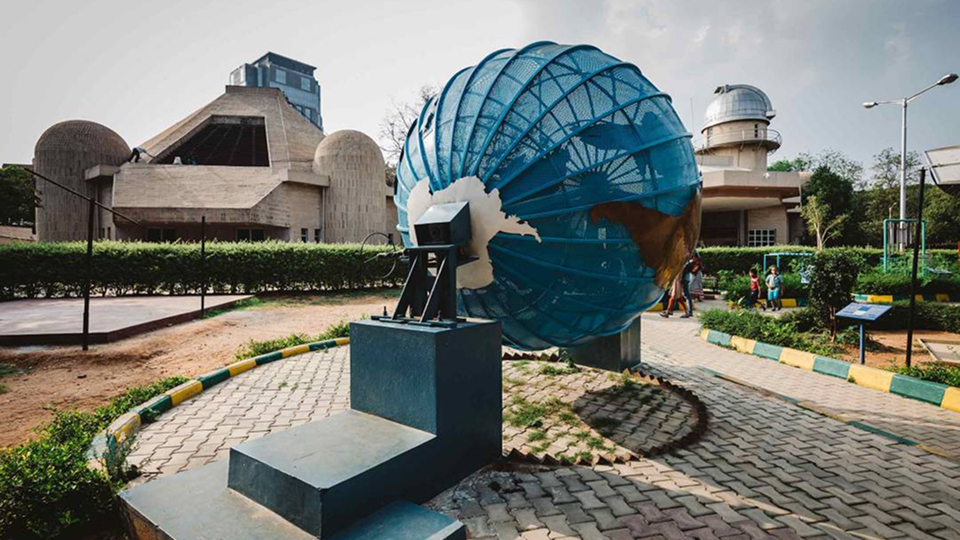
Space becomes understandable when students can see movement and scale instead of imagining it. Planetariums make astronomy feel structured and exciting.
- Big concepts made visual: Orbits, moon phases, seasons, and constellations become easier to grasp.
- Curiosity triggers: Shows naturally lead to strong questions, perfect for follow-up projects and presentations.
5) Wildlife Sanctuaries

Sanctuaries teach conservation in a way that feels immediate and meaningful. Students learn ecosystems as living systems, not diagrams.
- Animal behaviour learning: Habits, habitats, and survival patterns become easier to remember through observation.
- Conservation awareness: Students understand rescue, habitat protection, and human impact in a grounded way.
6) History Museums & Heritage Sites
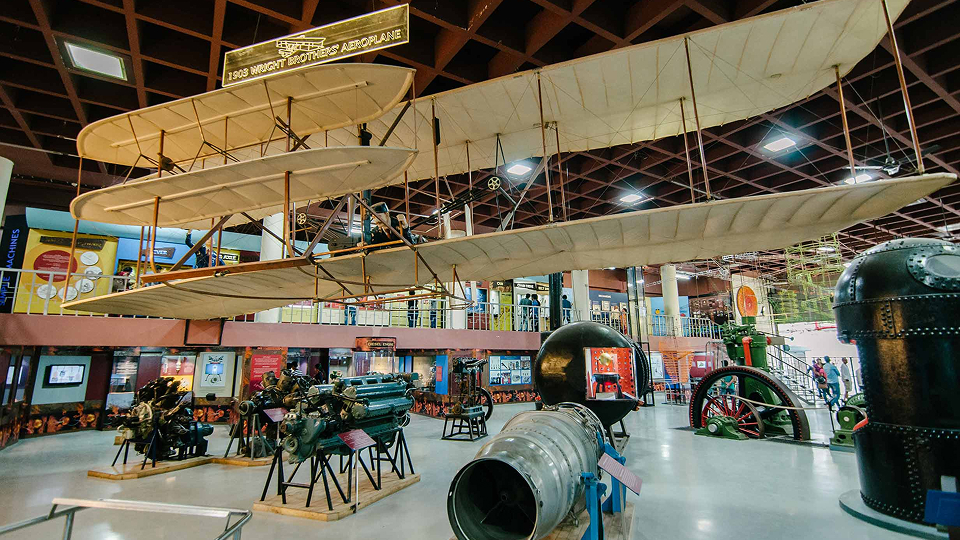
History feels real when students connect timelines to objects, places, and people. It’s one of the easiest ways to make learning emotionally memorable.
- Artefacts with context: Coins, tools, clothing, and maps reveal daily life—not just “events.”
- Heritage walk insights: Architecture and site stories show how culture, trade, and geography shaped decisions.
7) Farms & Agricultural Centres
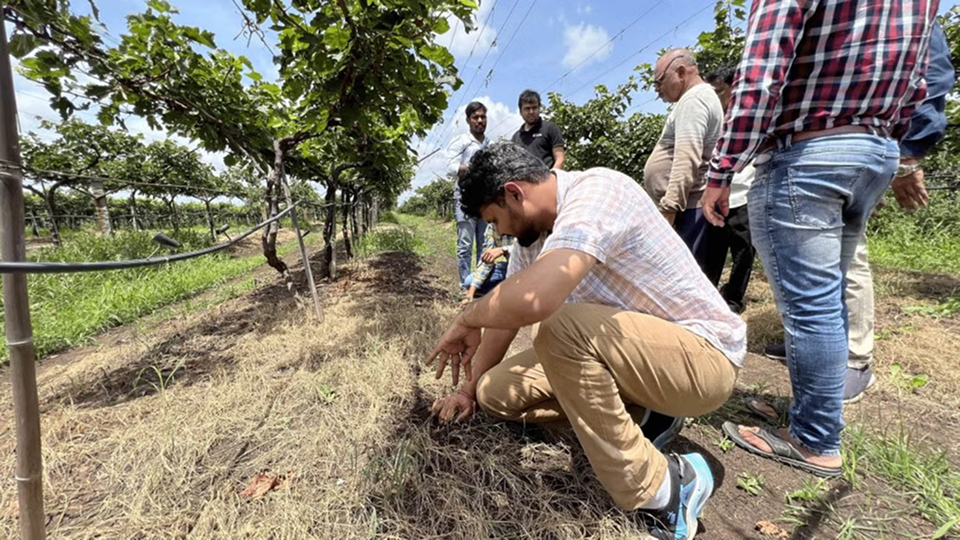
Farm visits connect food systems to daily life and build respect for resources. Great for EVS, biology, and social learning.
- From soil to plate: Crops, seasons, irrigation, and harvesting make food systems understandable.
- Sustainable habits: Students see why soil care, water use, and responsible farming matter.
8) Art Galleries & Cultural Centres
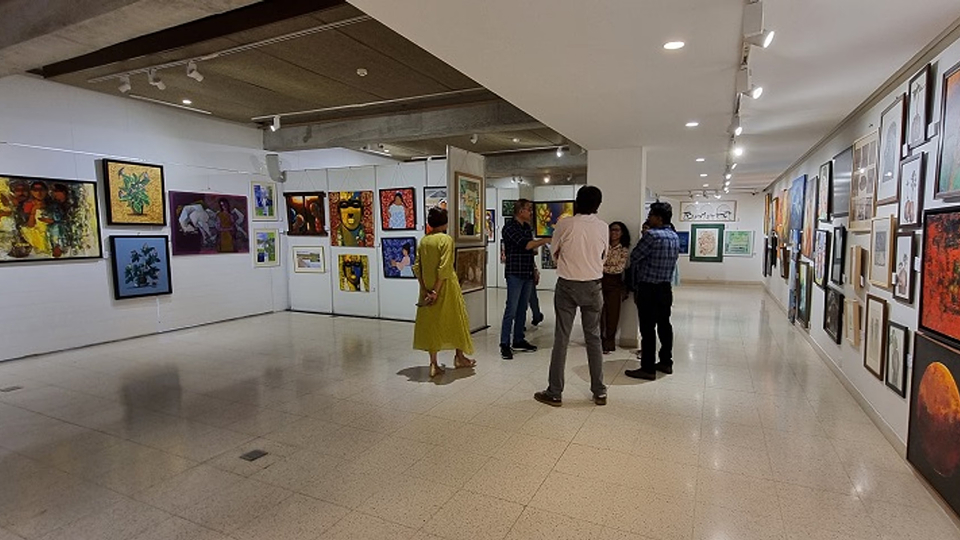
These trips build observation, interpretation, and confidence, skills that help in every subject. Students learn that ideas can be expressed in many ways.
- Visual thinking skills: Students practice noticing detail, meaning, and emotion beyond “right/wrong.”
- Culture + storytelling: Exhibits help students understand identity, traditions, and creative expression.
9) Manufacturing Plants
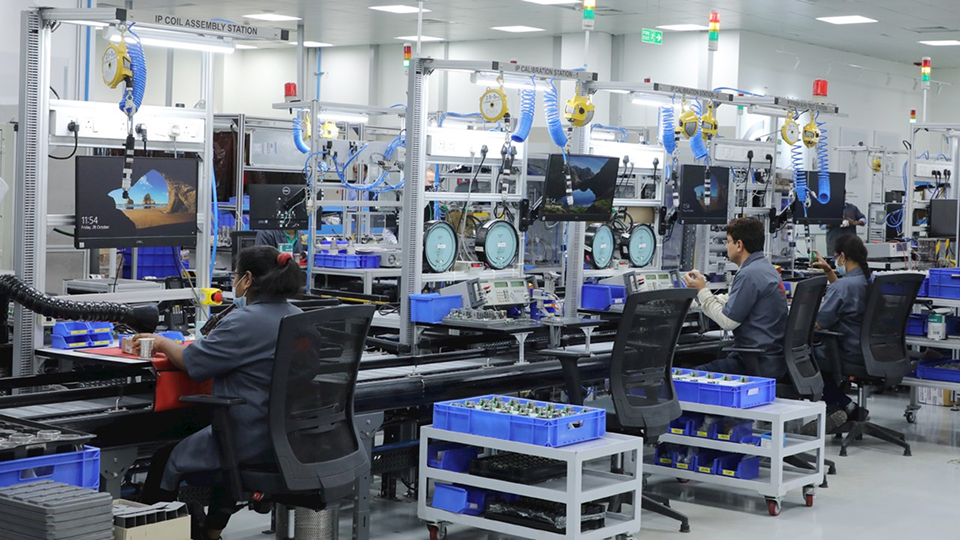
Plant visits show how classroom theory becomes real production. They’re great for older students exploring careers, systems, and applied science.
- Process in action: Students see how raw materials become products through step-by-step workflows.
- Quality + safety mindset: Real exposure to checks, standards, teamwork, and process discipline.
10) Community Service Field Trips
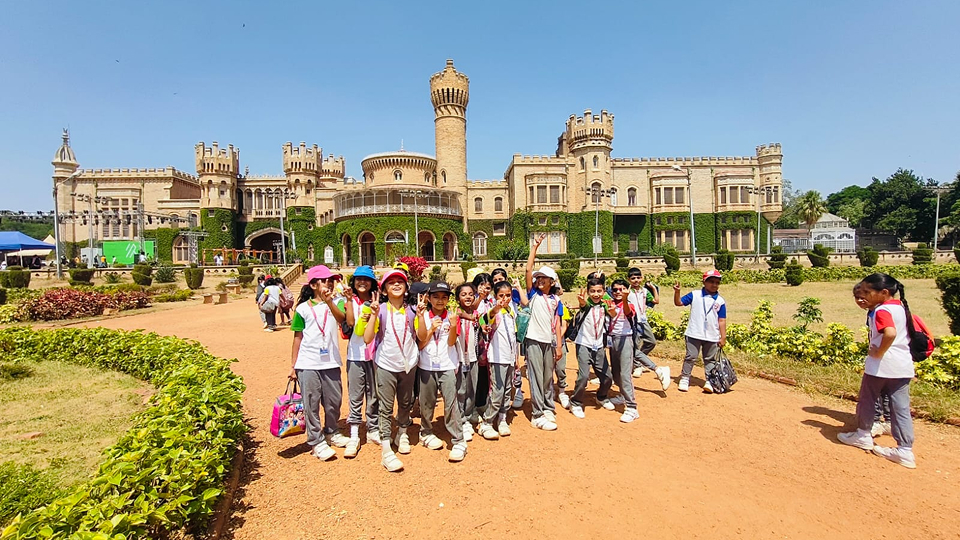
Service-based trips teach values through action and reflection. Students understand community needs and their role in solving problems.
- Empathy building: Students learn compassion, teamwork, and responsibility through contribution.
- Reflection-based learning: Guided reflection helps students connect service to real-world impact.
Also Read: Top 20 Tourist Places to Visit In Bangalore
Long-Term Benefits of Experiential Learning
Experiential learning doesn’t end when the bus ride back does. A well-planned field trip can reshape how students remember, engage, and care about what they study, long after the lesson moves on.
- Better knowledge retention: When students learn through real observation and interaction, concepts move from “information” to “memory.” They recall details more clearly because they can link them to a real place, moment, or experience.
- Increased curiosity and participation: Experiences spark questions, and questions drive learning. Students who’ve seen concepts in action are more likely to speak up, connect ideas, and stay engaged in related classroom discussions.
- Stronger emotional connection to learning topics: Seeing a habitat, artefact, or real-world process creates a sense of meaning. That emotional connection makes students care more, and caring is often the difference between short-term studying and long-term understanding.
How Educators Can Choose the Right Field Trip
A strong field trip isn’t picked just because it’s popular; it’s chosen because it supports learning outcomes and works smoothly for the age group, budget, and time available. When the selection is intentional, the trip becomes an extension of the classroom, not a break from it.
- Match trips with curriculum goals: Start with what students are learning right now (or next). Pick destinations that naturally reinforce those themes, science concepts, history units, environmental studies, or life skills, so the experience strengthens classroom learning instead of feeling disconnected.
- Prioritise safety and accessibility: Look for structured spaces, clear supervision points, student-friendly facilities, and easy movement for large groups. Accessibility matters too; comfortable walking routes, rest areas, and support for different student needs help everyone stay engaged.
- Choose experiences that students can’t replicate in classrooms: The best trips offer something schools simply can’t recreate: real artefacts, live ecosystems, behind-the-scenes processes, large-scale interactive exhibits, or immersive environments that make learning feel like discovery.
How Aquarium Paradise Turns Educational Field Trips Into Memorable Experiences
Schools increasingly look for destinations that balance learning + fun, so students stay engaged, and teachers can tie the trip back to classroom outcomes. The sweet spot is an experience that feels like discovery, without losing structure.
Places like Aquarium Paradise in Bengaluru naturally fit this need because they combine immersive visuals with a controlled, student-friendly setup.
- Immersive underwater tunnels: Walking through an underwater tunnel turns marine science into a wow moment. Students observe movement, adaptation, and habitat behaviour in real time.
- Close-up marine life observation: Seeing species up close helps students understand ecosystems, food chains, and biodiversity without it feeling like a lecture.
- Structured environments for school visits: Clearly defined zones make it simpler for groups to move together, follow a worksheet, and stay focused, while still having fun.
- Plan a fuller “fun + learning” day nearby: Aquarium Paradise is inside the Fun World Complex, making it easy to pair the visit with Snow City and Fun World for a more complete day-out experience.
Location: Jayamahal Main Road, opposite TV Tower, J.C. Nagar, Bengaluru, Karnataka 560006, India. Open daily from 10:30 AM to 8:00 PM (ticket counter usually closes around 7:15 PM).
When field trips are built like this, immersive, observable, and structured, students don’t feel like they’re being taught. They feel like they’re exploring.
Final Thoughts
Education becomes most meaningful when students don’t just study ideas, they experience them in the world around them. Field trips turn lessons into stories students remember, helping them connect concepts with real sights, real spaces, and real discovery.
When the destination is chosen thoughtfully, learning shifts from passive to powerful, students participate more, stay curious longer, and carry those memories far beyond the classroom.
Ready to plan an educational day that feels like discovery? Book your tickets for Aquarium Paradise today.
FAQs
1) What is experiential learning in simple terms?
Experiential learning means students learn by doing, observing, and reflecting, through real-world experiences like field trips, projects, and hands-on activities. It helps concepts feel practical, not just theoretical.
2) Why are field trips important for students?
Field trips make learning more memorable because students can see concepts in action. They also increase curiosity, participation, and classroom discussion after the trip.
3) How do field trips improve learning outcomes?
They strengthen understanding through real observation and multi-sensory engagement. Students often retain information better because they can link lessons to a real experience.
4) What makes a field trip “educational” and not just fun?
An educational trip has a clear connection to what students are studying, includes guided observation, and allows reflection afterwards. Fun is a bonus, but learning needs structure.
5) How do teachers choose the right field trip destination?
Match the destination to curriculum goals, check safety and accessibility, and prioritise experiences students can’t easily replicate in classrooms, like live ecosystems, heritage spaces, or interactive exhibits.
More To Read
6.17.2025
Top 10 Largest Crab Species Worldwide
Compare the largest crab in the world like the Japanese Spider and Coconut Crab. Explore traits, habitats, and conservation efforts. Click to know more!
%201.webp&w=1920&q=75)
9.4.2025
Top 20 Kids' Fun Places in Bangalore in 2026
Find the best kids’ fun places in Bangalore in 2026, from Aquarium Paradise and Snow City to Cubbon Park and Bannerghatta. Indoor & outdoor picks for every age.
5.22.2025
Explore the Mesmerizing Aqua Tunnel in Bengaluru
Discover Bengaluru's Aqua Tunnel, a top tourist spot with stunning aquatic displays and interactive experiences. Plan your visit today!

5.16.2025
Mesmerising Little Mermaid Shows Near You
Discover the magic of Aquarium Paradise in Bangalore with its unique underwater tunnel, mermaid show, and interactive marine experiences. Get more info here.
Recommended for you
Explore more from Aquarium Paradise and related picks tailored to this page.
