Water Quality Management in Aquarium: Clean Water Secrets (2026)
By Anurag Kamboj, Writer, Aquarium Paradise
Published
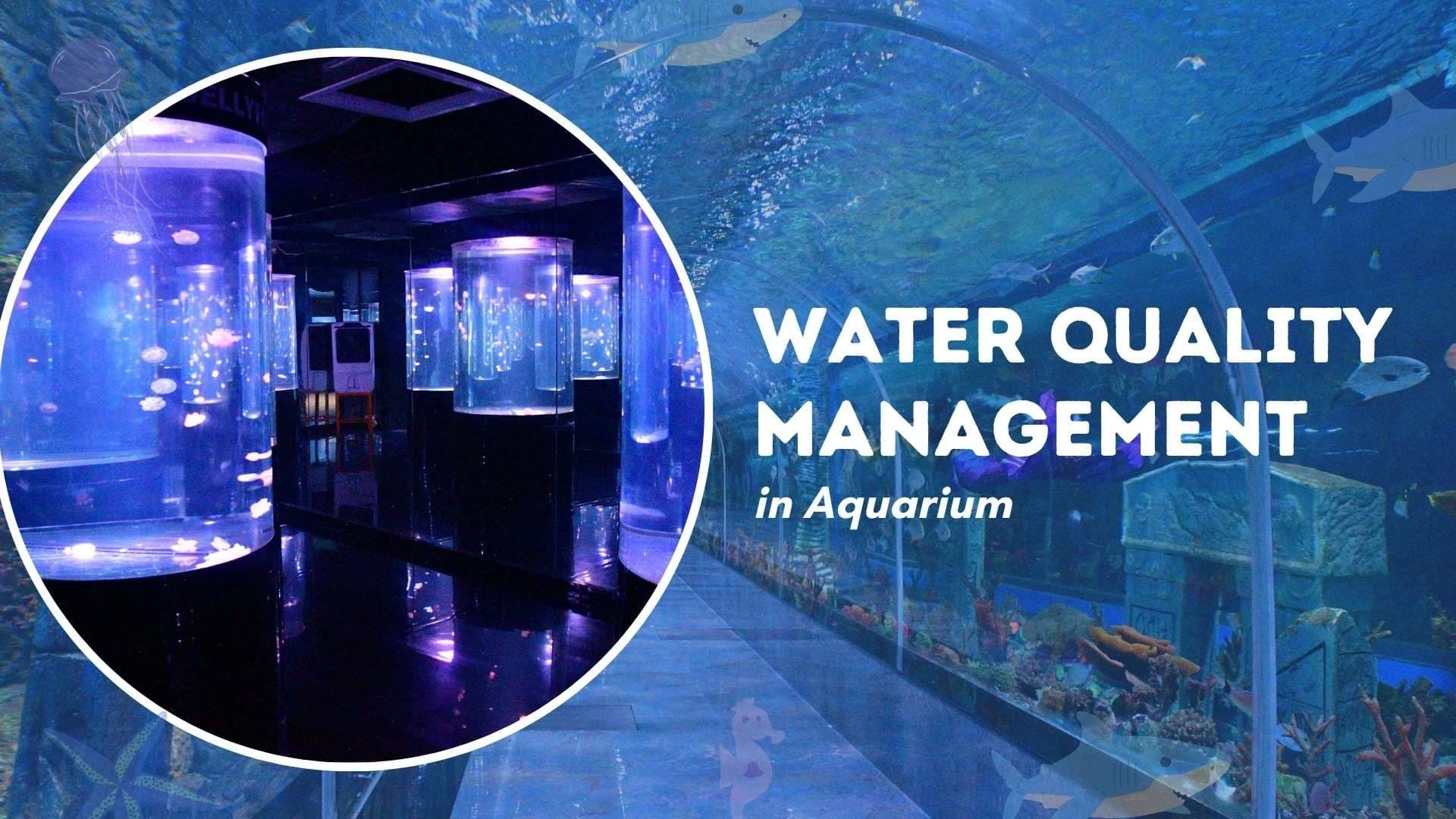
A fish can survive for years in an aquarium, or die within hours, depending entirely on the quality of the water around it. And the surprising part? Water that looks perfectly clean can still become toxic if the balance inside the aquarium starts to fail.
That’s why water quality management in aquarium systems is far more than just keeping water visually clear. It involves continuously controlling oxygen levels, waste buildup, pH balance, filtration, circulation, and other conditions that directly affect the survival of aquatic life.
Whether it’s a small aquarium at home or a large public underwater tunnel, the same principles are constantly working behind the scenes to keep the environment stable, healthy, and safe for marine species.
So, what really keeps aquarium water so clear, safe, and full of life? Time to take a closer look at what’s happening beneath the surface.

Child Ticket - Aquarium Paradise

Adult Ticket - Aquarium Paradise

FUNWEDNESDAY – Buy 1, Get 1 Free
At A Glance
- Ammonia and Nitrite Levels: Ammonia and nitrite are highly toxic in aquarium systems and are ideally maintained at 0 ppm through biological filtration and the nitrogen cycle.
- Temperature and Water Stability: Most tropical freshwater aquariums are typically maintained between 25°C and 27°C, while dissolved oxygen stability depends heavily on water circulation and surface agitation.
- Home Aquarium Maintenance: Mature home aquariums usually undergo 15%–30% water changes every 1–2 weeks, while newly established tanks are often tested 2–4 times per week during tank cycling.
- Industrial Aquarium Filtration: Large public aquariums maintain water quality using Life Support Systems (LSS), Moving Bed Biofilm Reactors (MBBR), protein skimmers, ozone treatment, and continuous digital monitoring systems.
- Signs of Water Instability: Cloudy white water, algae blooms, fish gasping near the surface, falling pH levels, and rotten substrate odours are common indicators of oxygen imbalance, filtration instability, or excess organic waste buildup.
Why Water Quality Matters in an Aquarium
An aquarium may look visually calm from the outside, but inside, water conditions are constantly changing. Fish release waste, food begins breaking down within hours, oxygen levels fluctuate, and harmful compounds can build up quickly in a closed tank system if the water is not properly managed.
In fact, research on aquarium and aquaculture systems shows that unstable water conditions, especially ammonia accumulation and oxygen imbalance, can cause fish stress, gill damage, disease vulnerability, and even mortality if not controlled properly.
Here’s why water quality plays such a critical role in aquariums:
- Fish are directly affected by the surrounding water: Unlike land animals, marine life continuously interact with the water through their gills and skin, which means poor water conditions immediately affect breathing, stress levels, and overall health.
- Ammonia buildup can become toxic very quickly: Fish waste and decomposing food release ammonia inside the tank. In closed aquarium systems, this can rapidly reach dangerous levels unless biological filtration breaks it down through the nitrogen cycle.
- Oxygen levels must remain stable continuously: Beneficial bacteria and aquatic life both depend on dissolved oxygen. Poor circulation or insufficient aeration can reduce oxygen availability and place stress on the entire aquarium ecosystem.
- Water chemistry affects fish behaviour and survival: Parameters like pH, temperature, salinity, nitrite, and nitrate levels influence metabolism, immunity, feeding behaviour, and long-term fish health. Sudden fluctuations can shock aquatic species very quickly.
- Closed aquarium systems are less forgiving than natural water bodies: In oceans and rivers, waste gets diluted naturally. In aquariums, the same waste remains trapped inside the system unless filtration, water changes, and circulation continuously remove or process it.
- Water quality directly affects clarity and visibility: Cloudy water, algae blooms, foul odours, or suspended waste are often signs that filtration or nutrient balance inside the aquarium is failing.
- Large aquariums depend on even stricter water control: Public aquariums managing multiple marine species across massive tanks rely on continuous filtration, circulation, oxygenation, and real-time monitoring systems to maintain stable water conditions at scale.
You start to notice this more clearly in spaces like Aquarium Paradise, where the clarity of the water directly shapes how marine life is seen; every movement sharper, every colour more defined across immersive walkthroughs and the 180-foot underwater tunnel.
So, what actually determines whether aquarium water remains healthy or starts becoming unstable over time? It usually comes down to a few key water parameters working together continuously behind the scenes.
Key Water Parameters That Keep Aquariums Healthy
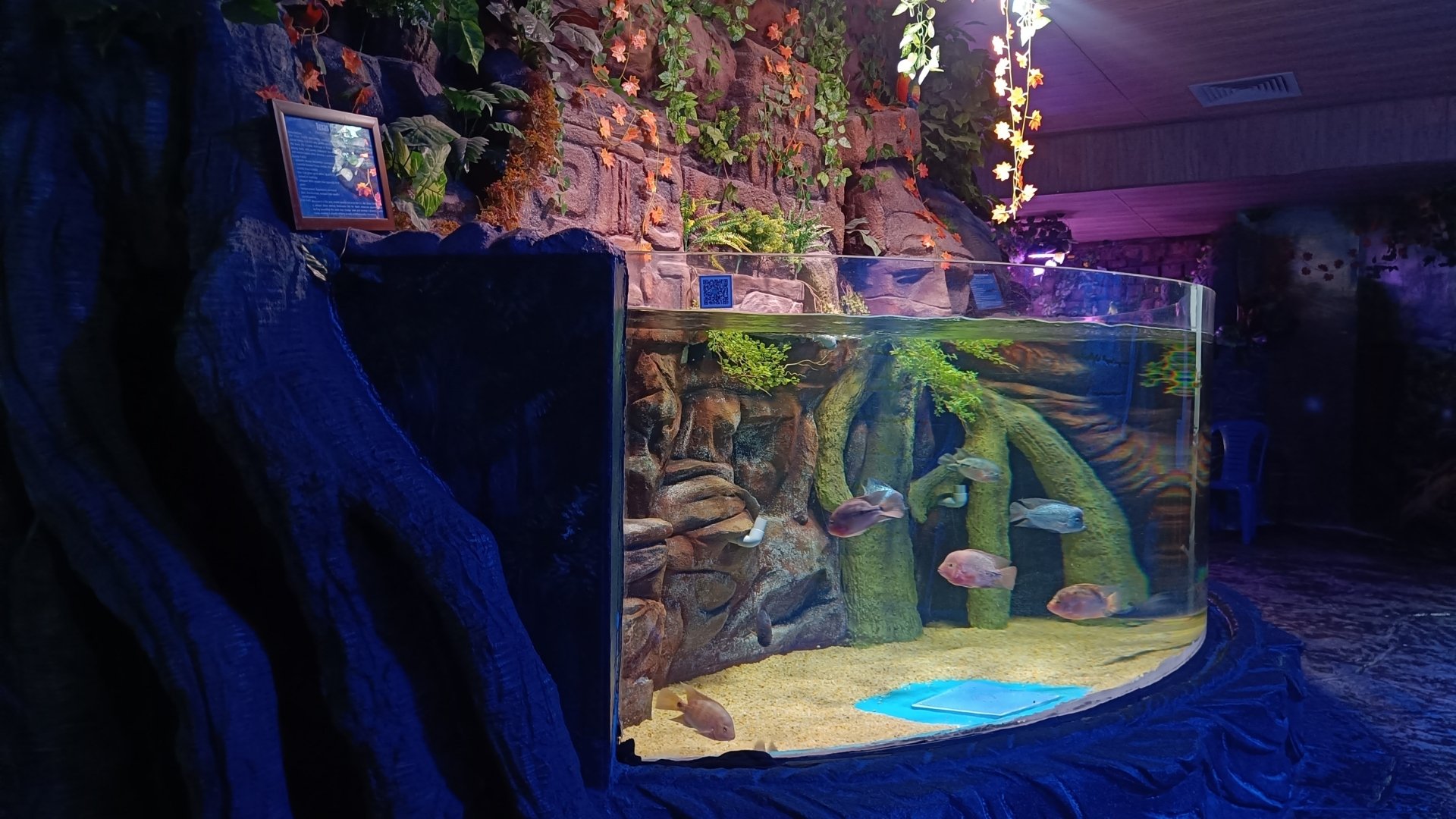
Maintaining a stable aquatic environment requires a delicate balance of chemistry and biology (including frameworks referenced by the Food and Agriculture Organization). While public facilities use industrial-scale automation, the core science remains the same for every enthusiast:
- Ammonia: Highly toxic to fish and ideally maintained at 0 ppm through effective biological filtration.
- Nitrite: A toxic byproduct of the nitrogen cycle that should also remain at 0 ppm.
- Nitrate: Less toxic than ammonia or nitrite, but excessive buildup can still stress aquatic life over time.
- pH Levels: The acidity or alkalinity of the water is measured on a scale of 0 to 14. Most freshwater species thrive between 6.8 and 7.8, while marine environments require a more alkaline range of 8.1 to 8.4.
- Temperature: Most tropical freshwater species thrive between 25°C and 27°C.
- Carbonate Hardness (KH): Helps stabilise pH and prevents sudden chemical fluctuations in the aquarium.
Also Read: Underwater Experience in India: Ocean vs Aquarium (2026 Guide)
Keeping these parameters stable over time is what ultimately determines whether an aquarium remains healthy or becomes chemically unstable.
How to Manage Water Quality in a Home Aquarium
Home aquariums are closed ecosystems, which makes them a useful starting point for understanding why water quality management matters at any scale.
Unlike natural water bodies, where waste dilutes and disperses, everything that enters a home tank stays there unless something actively processes or removes it. That constraint is what makes the science visible.
1. Filtration and the Nitrogen Cycle
Filtration is three separate processes working together, each targeting a different category of waste.
- Mechanical filtration captures visible debris like uneaten food and fish waste before it breaks down into dissolved compounds. Filter media needs rinsing roughly every 1 to 2 weeks before trapped waste starts decomposing inside the filter itself.
- Biological filtration is where the critical chemistry happens. Beneficial bacteria convert toxic ammonia into nitrite, then into nitrate. Both ammonia and nitrite need to stay at 0 ppm because even trace nitrite interferes with oxygen transport in a fish's bloodstream. Disrupting this bacterial colony through aggressive cleaning or replacing all filter media at once can break the cycle without any visible warning.
- Chemical filtration uses activated carbon to absorb dissolved compounds that biological filtration cannot process, including odours, tannins, and trace medications. The media becomes exhausted over time and needs periodic replacement depending on tank conditions.
2. Temperature and Oxygen
These two parameters are more closely connected than they appear.
- Temperature directly influences fish metabolism because fish are ectothermic. Rapid temperature fluctuations can place stress on their bodies, weaken immunity, and increase susceptibility to disease.
- Dissolved oxygen depends on surface agitation and water movement. When circulation slows, oxygen drops. Fish show this behaviourally before any test kit confirms it, grouping near the surface or around filter outlets where movement is strongest.
- The two interact directly. Warmer water holds less dissolved oxygen, so a temperature spike and an oxygen drop often happen at the same time.
3. Water Changes
Water changes handle what filtration cannot.
- The nitrogen cycle converts ammonia into nitrate, but stops there. Without regular dilution, nitrate climbs past 40 ppm, the point where it starts stressing fish and feeding algae growth.
- Frequency and volume depend on the tank. Mature aquariums generally need 15% to 30% changes every 1 to 2 weeks. Newly established or heavily stocked tanks need more frequent changes because ammonia and nitrate levels shift more quickly.
- Substrate waste is the less obvious problem. Organic matter trapped beneath gravel or sand decomposes in low oxygen conditions, producing ammonia spikes and hydrogen sulphide in areas filtration never reaches.
- Feeding directly drives water quality. Uneaten food begins decomposing within a couple of hours, releasing ammonia directly into the water. Most fish only need to be fed once or twice a day, with only as much food as they can consume in around 2 to 3 minutes. Overfeeding is one of the most common causes of ammonia spikes in otherwise stable tanks.
While home aquariums manage these conditions on a smaller scale, public aquariums apply the same principles across massive interconnected ecosystems using industrial filtration and continuous monitoring systems.
How Large Aquariums Manage Water Quality at Scale
Public aquariums operate on a scale where even minor water chemistry imbalances can affect entire ecosystems containing thousands of marine organisms simultaneously. To maintain stable conditions across massive tanks and underwater tunnels, these facilities rely on advanced Life Support Systems (LSS) that function more like industrial water treatment plants than standard aquarium filters.
1. Industrial Filtration Systems
Large aquariums use multiple filtration stages simultaneously to process enormous water volumes continuously.
- Mechanical filtration: Large sand filters, drum filters, and pressurised systems remove suspended waste, uneaten food, and organic debris before it begins decomposing inside the water system.
- Biological filtration: Moving Bed Biofilm Reactors (MBBR) and bio-reactors contain millions of floating bio-media surfaces where nitrifying bacteria break down toxic ammonia and nitrite continuously at industrial scale.
- Protein skimmers: Common in marine systems, protein skimmers remove dissolved organic compounds, fish waste, proteins, and microscopic particles before they degrade water quality or increase bacterial load.
- Chemical and ozone treatment: Ozone injection systems are often used to improve water clarity, reduce pathogens, oxidise dissolved contaminants, and stabilise water quality without leaving long-term chemical residue.
2. Continuous Digital Monitoring
Unlike home aquariums that depend on manual testing, public facilities monitor water quality continuously using digital sensor systems.
- Automated probes track parameters such as dissolved oxygen, salinity, pH, ORP, temperature, turbidity, ammonia, and nitrate levels in real time.
- Many large aquariums use telemetry and automated alerts to detect sudden parameter drift before it affects marine life or destabilises biological filtration systems.
- Computer-controlled dosing systems automatically regulate buffering compounds, trace minerals, and chemical stability across different aquatic habitats simultaneously.
3. Water Movement and Oxygenation
Large marine exhibits require constant circulation to maintain oxygen stability and prevent low-flow “dead zones” where waste can accumulate.
- High-capacity pumps continuously circulate water across tunnels, reef exhibits, and open viewing tanks to distribute oxygen evenly throughout the system.
- Surface agitation, aeration systems, waterfalls, and oxygen injection technologies help maintain dissolved oxygen levels for high-bioload marine environments.
- Large aquariums often process the full tank volume repeatedly throughout the day to maintain stable chemistry and visibility standards.
4. Stability Across Multiple Marine Habitats
Public aquariums rarely operate as a single uniform tank system. Different exhibits often require entirely different environmental conditions at the same time.
- Reef habitats, jellyfish exhibits, shark systems, freshwater tanks, and tropical marine environments all require different temperature, salinity, lighting, and circulation conditions.
- Automated environmental controls help maintain species-specific water chemistry across interconnected systems without destabilising the larger ecosystem.
- Water clarity also becomes operationally important because suspended particles, algae growth, or turbidity can significantly reduce visibility inside large acrylic viewing panels and underwater tunnels.
Also Read: World Marine Species: See Them Up Close in Bangalore Without Travel in 2026
Whether in a home aquarium or a large public exhibit, water quality problems usually begin showing visible signs long before the entire system fails.
Common Signs of Aquarium Water Instability
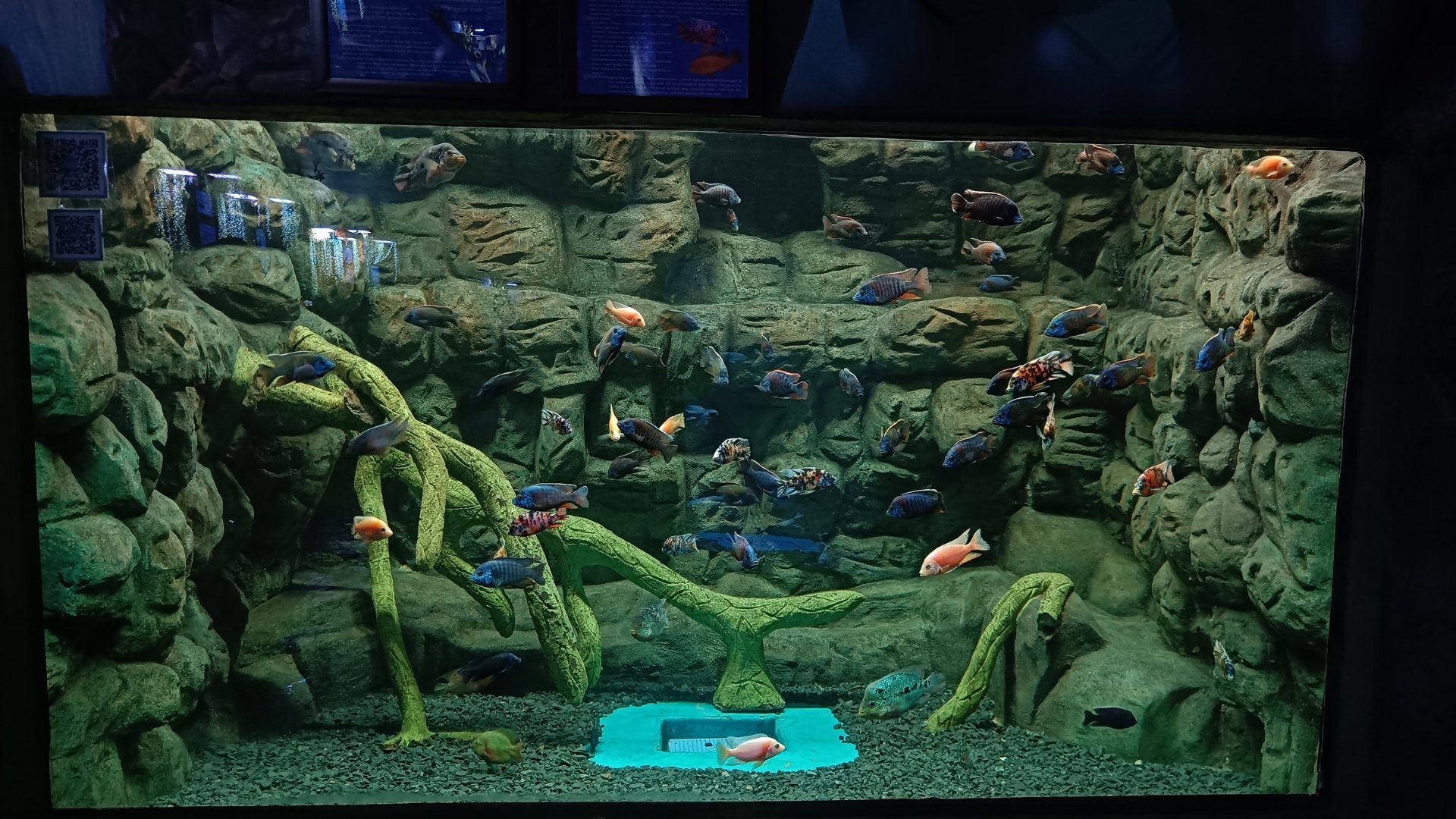
Water instability usually shows symptoms before parameters reach critical levels. The key is knowing what to look for, both in the water and in the behaviour of the fish.
When water chemistry, filtration, circulation, and oxygen levels remain properly balanced, the difference becomes immediately visible throughout the aquarium environment.
Seeing Aquarium Water Quality Up Close
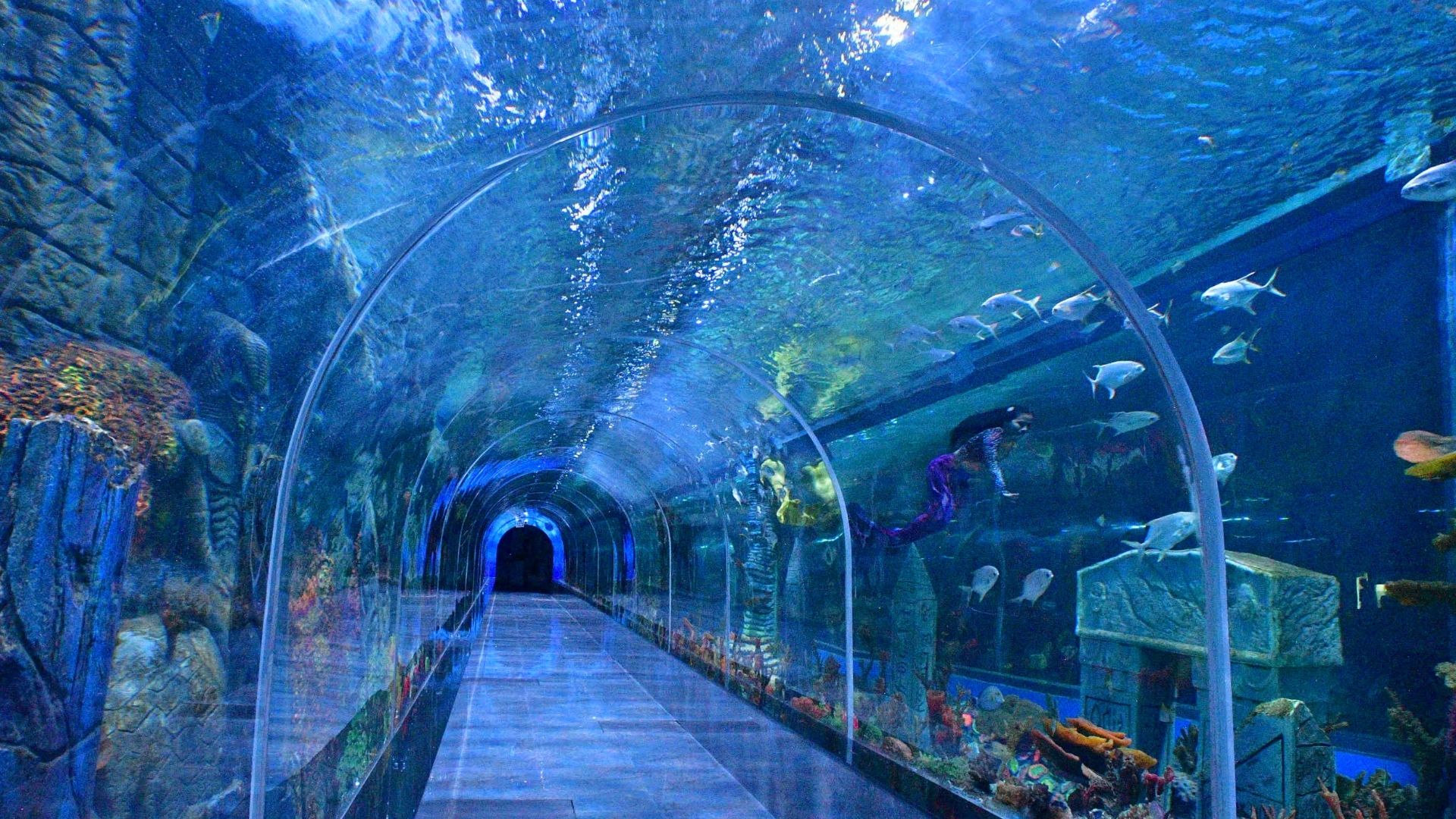
A well-managed public aquarium is one of the few places where water quality becomes something you can actually experience rather than just measure. Walking into a facility like Aquarium Paradise, the science discussed throughout this article stops being abstract.
The water isn't just clear, it's consistently clear. Fish move naturally across large viewing panels without the haze or cloudiness that signals filtration problems.
Inside the 180-foot underwater tunnel, that visibility stretches in every direction: above, beside, and across curved glass, which only works because turbidity and suspended waste are being continuously controlled at scale. Even experiential elements like the Mermaid Show depend entirely on that clarity; murky water would make it unwatchable.
That's the practical difference between water that tests clean and water that's genuinely balanced. One passes a parameter check. The other holds up under full public visibility, across a large interconnected system, every hour the facility is open.
Here's what that looks like when you break it down by design.
- A walkthrough structure means water stability can't be selective: Unlike isolated tanks, the tunnels, themed zones, and viewing panels are hydrologically connected. Conditions have to remain stable across every section simultaneously, not just in the most visible ones.
- Clarity is load-bearing in a space like this: Inside the 180-foot underwater tunnel, visibility stretches across large curved panels in every direction. Even minor turbidity would be immediately obvious, which means filtration here isn't just functional, it's structural to the experience.
- 100+ species in one system is a genuine water quality challenge: Rays, sharks, jellyfish, and tropical fish all have different temperature, salinity, and chemistry requirements. eeping all of these stable simultaneously requires continuous monitoring rather than periodic adjustments.
- Circulation is doing more than moving water: Constant flow keeps oxygen evenly distributed, prevents low-flow dead zones where waste accumulates, and recreates the kind of natural current movement that static tanks can't replicate.
- The design features are also water management features: The indoor waterfall, ambient lighting, and themed tank layouts aren't purely aesthetic; they influence how water moves, circulates, and behaves across different zones of the space.
Also Read: Top Reasons Aquariums Attract Visitors in India
Conclusion
Once you start looking at aquariums this way, the experience changes. It’s no longer just about what you see; it’s about understanding what makes that moment possible in the first place.
The next time you walk into an aquarium, you’ll notice the details differently. The clarity of the water, the way fish move, and how everything feels steady and undisturbed all point back to a system working quietly in the background.
And that’s where the real appreciation begins. Not in the obvious, but in the precision that holds everything together.
Places like Aquarium Paradise bring that precision into a form you can actually walk through, making it easy to experience firsthand, especially when you take the time to plan your visit and see it all come together in real time.
FAQs
1. Can aquarium water ever be too clean?
Yes. Over-filtering or using RO (reverse osmosis) water without remineralising it strips out essential minerals, destabilising pH and KH. Sterile water with zero buffering capacity can crash faster than moderately hard tap water that's been properly conditioned.
2. Why do fish sometimes die right after a water change?
Usually temperature shock or chlorine exposure. Tap water contains chloramines that are lethal to fish even in small concentrations. Water must be dechlorinated and temperature-matched before it enters the tank. This is one of the most common and entirely preventable causes of fish loss.
3. How long does it actually take to cycle a new aquarium?
Typically 4–8 weeks for a full nitrogen cycle to establish without shortcuts. Using bottled beneficial bacteria, seeded filter media, or ammonia dosing can reduce this, but there's no reliable way to skip it entirely without risking a tank crash.
4. Does a bigger tank mean easier water management?
Generally yes. Larger water volumes dilute waste more slowly, giving you more time to correct imbalances before they become critical. A 200-litre tank is significantly more forgiving than a 30-litre one with the same stocking level.
5. Why does a tank that ran fine for months suddenly crash?
Usually one of three triggers: a spike in bioload (new fish added), a disruption to biological filtration (aggressive cleaning or medication use), or a hidden decomposing source like a dead fish behind the substrate. Stability is fragile precisely because it depends on living bacterial colonies, not just equipment.
Writer, Aquarium Paradise
Anurag Kamboj writes the Aquarium Paradise blog, covering marine life, exhibits, ticket offers and practical tips for planning a family visit to Bengaluru's aquarium.
- Aquariums
- Marine life
- Family days out in Bengaluru
More To Read

6.17.2025
Top 10 Largest Crab Species Worldwide
Compare the largest crab in the world like the Japanese Spider and Coconut Crab. Explore traits, habitats, and conservation efforts. Click to know more!
%201.webp&w=1920&q=75)
9.4.2025
Top 20 Kids' Fun Places in Bangalore in 2026
Find the best kids’ fun places in Bangalore in 2026, from Aquarium Paradise and Snow City to Cubbon Park and Bannerghatta. Indoor & outdoor picks for every age.
5.22.2025
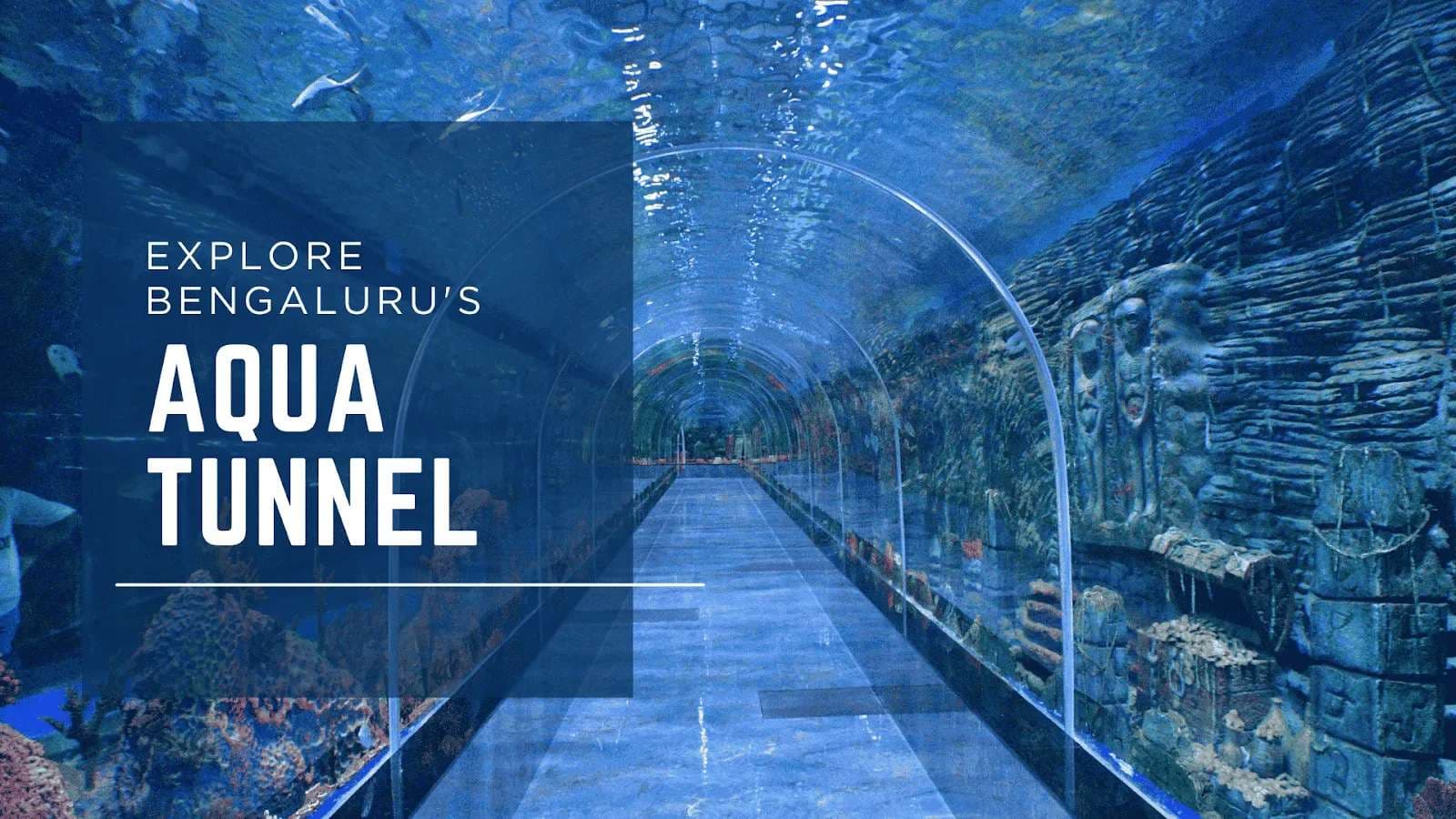
Explore the Mesmerizing Aqua Tunnel in Bengaluru
Discover Bengaluru's Aqua Tunnel, a top tourist spot with stunning aquatic displays and interactive experiences. Plan your visit today!

5.16.2025
Mesmerising Little Mermaid Shows Near You
Discover the magic of Aquarium Paradise in Bangalore with its unique underwater tunnel, mermaid show, and interactive marine experiences. Get more info here.
Recommended for you
Explore more from Aquarium Paradise and related picks tailored to this page.
